If you listen to the met office then its now spring, but I always count spring as starting at the equinox.
Its certainly starting to look like spring with the daffodils now starting to appear. The last couple of weekends I have been hoping to get out and shoot a few flowers and landscape shots but as usual when you try and plan something the rain always seems to stop play. Still there is always next weekend.
The history of cameras has been one of modularity. Any 35mm professional camera from the 1960’s allowed you to add a grip, motor drive, different viewfinder and even bulk film backs.
Medium format and large format has always been modular and extremely flexible.
My large format camera, an Ebony 45S and my medium format Hasselblad 503CW are both old school and very modular.
The reason this post came about is that when shooting in the studio with my medium format camera, when using film I have a long lead running from the flash port on the lens to a remote unit to trigger the flash, when using my PhaseOne digital back then its a cable connected to the flash port on the back. I have the waist level viewfinder so no hot shoe.
I have been researching other viewfinders particular those with cold shoes, that way I can fit the wireless trigger in the cold shoe and run a short 10 cm cable to that and not have a longer cable running to the floor.
I find it interesting that the trend has been for less modular and less upgradable cameras since digital came along. Now that trend is moving to medium format. The first was the Leica S and the Pentax 645Z, less modular and with handling like a 35mm camera.
Now we have Hasselblad and Fuji releasing mirrorless medium format cameras and we now have a real race on to produce small cheap medium format cameras that handle like 35mm cameras. Cheap is relative as we are still looking at a near £10K investment to get you started.
I was in the studio the other week experimenting with some mottled grey backgrounds that are designed to be lit with coloured gels.
In the above test shot I had two flash heads gelled with blue cut filters at the top and two flash heads without gels lighting the bottom. You can do this sort of thing in Photoshop but in camera is easier.
This shot shows the issues with focusing, particularly with the common technique of focus and then recompose. The problem is I focused on the high contrast detail on the dress, that you can see is in sharp focus, I then recomposed and took the shot. As you can see the eyes are not quite in focus.
In this situation its really worth the time to use the selector on you camera to select the focus sensor closest two the eyes, usually the front eye to get things sharp.
Luckily I did not make the mistake on all my shots.
Canon A1 Fujichrome Slide Film Taken in the late 1980’sI see Kodak are aiming to re-introduct Ektachrome in the fourth quarter of 2017.
Hasselblad and Film Scan, processed in LR4Over the last ten years we have seen many classic film stocks disappear. You can argue about the technical merits of film over digital, but its hard to argue that digital is now cheaper and easier. Even medium format is now threatened not only by digital medium format but by the current trend of 36 MP to 50 MP 35mm full frame cameras.
Now unless you shoot large format film is a choice for artistic reasons and not technical reasons.
The last few trips into Lincoln I have taken my Leica M4 loaded up with Kodak Tri-X. This last time I took my Leica M8, so I have a few shots I can put on the blog.
It was a sunny if cold day and there was a distinct lack of people around to photograph so I ended up looking for details and looking up and down.
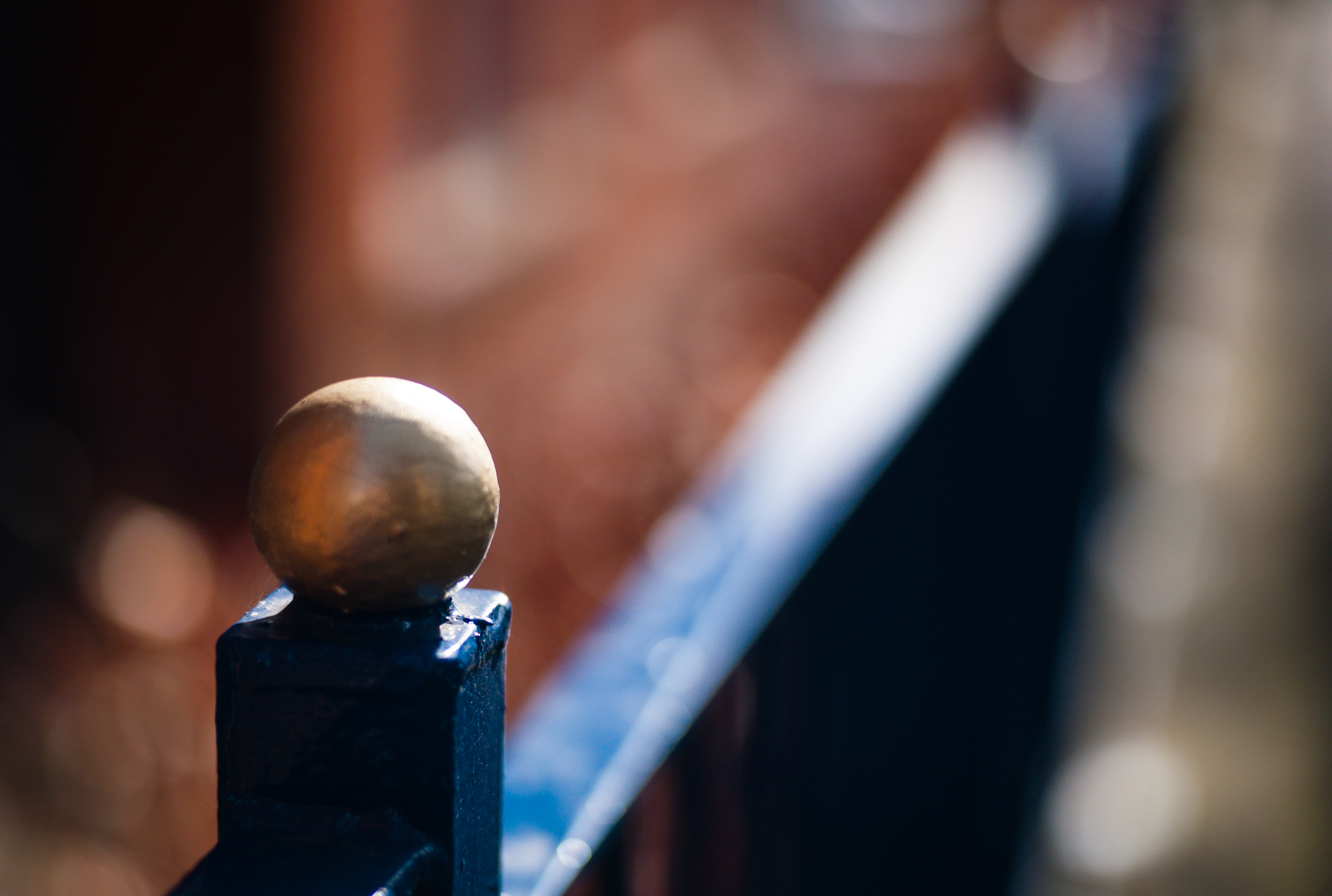
The late winter sun sent the old red brickwork a rich red so I thought it was worth a few shots.
With the recent sun we have also had a few snowdrops and crocuses start to emerge. With the wind from storm Doris (who thinks of these names), I attempted to grab a quick shot of the snowdrops near County Offices in Lincoln during one of my lunch breaks, as well as the wind to contend with I made things even harder for myself by shooting wide open at f/1.4 with my Summilux. Its not quite sharp, a range finder is not the best tool for this kind of work but I love the effect of a wide open Summilux.
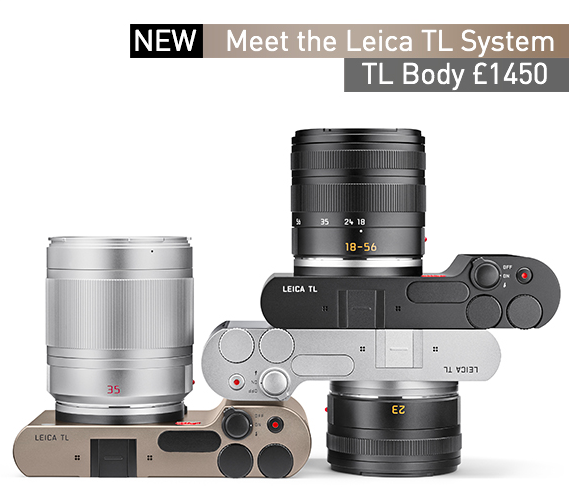
Having put myself on the reserve list for a new Leica, I have been having fun looking at the bling and toys available.
From smart leather camera bags ranging from £20 to £2000, to soft release buttons, there is quite a range of products available.
As digital M’s have no film winding lever, a digital M is slightly harder to hold in safe grip, a number of companies have been offering metal grips that you fit into the hot shoe of a digital M.
Now Leica themselves have gotten into the action and released their own version dedicated to the M10 and matching the materials the camera is made of.
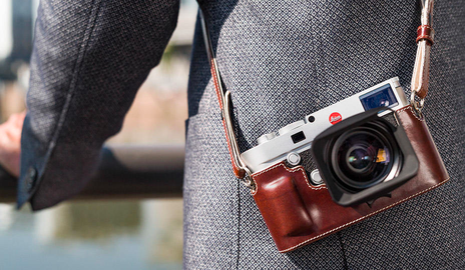
The other option that I like the look of is the new leather half case, this has a detachable back to allow access to the LCD screen, but now with the dedicated ISO dial on top, once the camera is setup there is no need to go into the menus at all so the case also can be used with the back in place making the camera look like a traditional film M, just the thing to stop that chimping.
A couple of weeks a go I was shooting a few new models (new to me), to see if they would suit a future project I am working on.
Many photographers are obsessed with camera gear, and continuously upgrade their cameras and lens, wanting higher ISO performance, more resolution and more sharpness.
To be honest we have reached the point now where sometimes you want less. Many of the older lens with more character work better. Many lens and cameras today are very high performing and the camera is showing up the lens or the lens the camera.
In the case of model photography every pore and imperfection is now highlighted.
The above shot is from a 36 MP camera, more then enough resolution and the result when zoomed in is simple stunning. Its now the case for many of my shots I use a little softening and negative clarity (Adobe Camera RAW setting) to tone down the results of the lens and then add a little sharpness back selectively to the eyes, hair and dress.
Lens choice is a very personal thing. For the top shot I was using a 300mm with a teleconverter, thus its the equivalent of a 500mm lens.
Get the Light Close – edit completed
The portrait of the lovely Charlotte was taken with a 70-200mm f/2.8 zoom set to 90mm.
This shot with the highly selective depth of field was a 50mm f/1.4
There are a lot of lens out there, and for my SLR I have the whole range from 12mm to 300mm plus teleconverters. Its only now that I start to realise that I could successfully rationalise my lens choice.
First lets talk wide angles. Personally I feel a wide angle starts at 24mm (for 35mm full frame), and goes to 20mm. Any wider then this and we are talking super wide angle and they are very hard to use.
I would go for a 24mm, not too wide to be hard to use but still a real wide angle.
For standard lens then a 35mm and a 50mm go well. I use both and it depends what mood I am in. Often I find myself shooting black & white with a 35mm and colour at 50mm.
Next we have the short telephoto, and here I currently use a zoom the trusty 70-200mm. I fully intend to add a 90mm lens to my Leica.
Then long lens, this is where budget comes into play. If you shoot MicroFourThirds its much cheaper then full frame. I have a 300mm f/2.8 but with cameras getting better and better at high ISO then a 300mm f/4 is the cheaper option.
Users of SLR’s tend over the years to build up large kits and leave most of their lens at home, thats where rationalising comes in and knowing what you shoot.
For most people a 35mm and a 90mm would suit 90% of their photography.
If your into medium format then its easy to get into systems where the lens cost £5k each. At this kind of money ask yourself what do you shoot. If your a landscape kind of guy then the medium format equivalent of the 35mm and 90mm is likely the option to go for. If your a studio shooter then this is also a good starting point with the 35mm handling groups and the 90mm head and should portraits.
Wildlife photographers would go for maybe a 100mm micro and the longest lens they could afford.
If your into architecture and especially if you shoot indoors then you may need to go for 20mm, 24mm tilt and shift and a 35mm.
When you boil it down and really look at it you can get a way with about two lens and maybe one speciality lens. That is until the GAS (Gear Acquisition Syndrome) kicks in.
I currently have 24mm, 35mm and 50mm for my Leica and look to add a 90mm. This should do but then you start to look at lens character. The Leica 28mm f/5.6 has a wonderful look to it and having a selection of f/1.4 lens for character and f/2.8 for portability sounds like a good option. Unfortunately GAS never seems to stop.