Cloud Services

Cloud services make a lot of promises and now many services have a cloud offering.  By cloud of course we just mean a service from the internet, its another buzzword that has become popular over the last few years.

The concept is not without risk, if your documents or application is really in the cloud then when the service is down or your internet access is down your stuck.

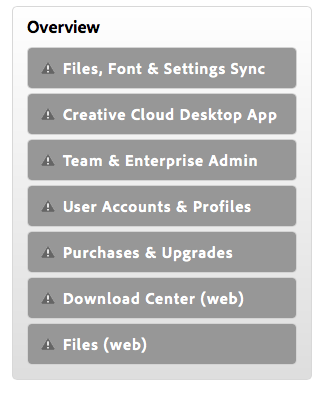
Yesterday I had the double whammy of a power cut at home cutting off my internet access (no mobile phone signal at home) then while I was updating my Adobe Creative Cloud Membership the Adobe CC went down and is still down while I type this.

Adobe CC Status

Luckily Photoshop and Lightroom are still locally based applications and work without internet access but the cloud based data is all currently unavailable.

Adobe are not alone, all the major players including Microsoft and Amazon have all had major outages over the past year.

I keep some documents local and some cached between my local hard disk and the internet (sorry should have said cloud!) and a few completely in the cloud.  It really makes you think what you should store, and where and what applications and services you need locally and what can be in the cloud.


OS X Track Pad Preferences Freezing

TouchPad

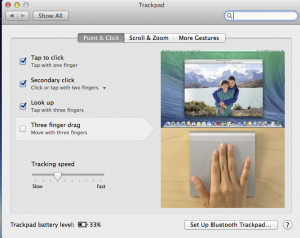
My batteries were failing on my external track pad the other day, and so I changed the batteries, since then whenever I went into the track pad preferences, System Preferences would freeze.

A quick reboot and no change so then I resorted to Apple’s support pages; as is generally the case with OS X the fix was quick and easy.

Go into your home Library folder, then in Cachese delete com.apple.systempreferences.  That was it, all back and working.

Recent versions of Mac OS have hidden the Home Library folder under the user account so a quick way of getting there is to press Command-Shift-G then in the box type:

~/Library

This will take you to your library folder.


MacBook Airs have a minor upgrade

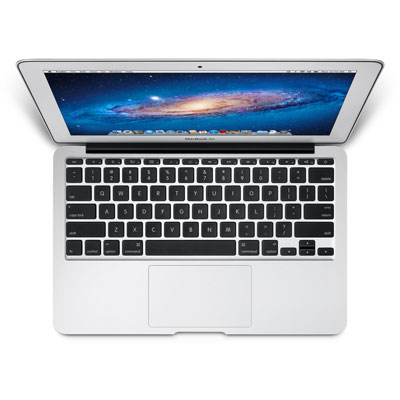
Macbook Air -topThere have been a lot of rumours over the last year about a new retina MaBook Air. The rumours also indicate that it will have a 12 inch screen.

The range currently consists of an 11 model and a 13 inch model. The 11 is great for people on the go and easily fits into a small camera bag. You would not want to do too much work on the 11 inch screen and if it was your only computer a desktop monitor would be essential. The 13 inch is more practical and still fits in most camera bags. It also comes with a built in SD card reader making it even more useful.

This weeks upgrade was a minor processor upgrade plus a minor price cut, always gratefully received.

Not sure whether to grab one of these or wait a little longer to see what comes.

Leica T 701 – Part 1 – iOS intergration

Leica Press Conference Times

  • 3 pm Berlin time
  • 2 pm London time
  • 9 am New York time
  • 6 am Los Angeles time (sorry for that)

This afternoon for us in the UK Leica make their press announcement and its now about definite that the announcement is going to be the new Leica T 701.

It is looking like a standard mirror less, none viewfinder compact system camera with a fancy touch screen, and with the ability to take Leica M glass as well as a new range of autofocus Leica T glass.

For most its likely to be too expensive and not offering anything that a Sony NEX or Fuji X camera cannot do better, but for those of us with Leica M glass its worth a serious consider as it will support coding on modern M glass and correct vignette and colour drift.

As I am publishing this before the announcement the above is conjecture but I believe will be accurate from the rumours so far leaked.

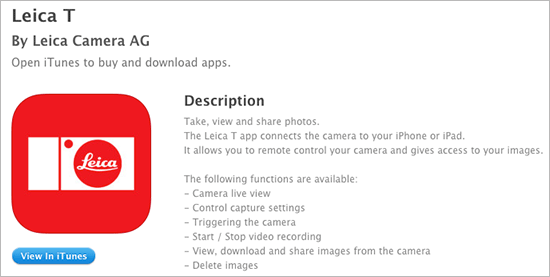
Its also going to integrate with the iPhone and iPad like many other recent mirror less releases and the iOS app has already been released.

Leica-T-701-camera-iOS-appAccording to Leica it will:

Camera live view Control capture settings Triggering the camera Start / Stop video recording View, download and share images from the camera Delete images.


Adobe’s Lossy DNG

iPad MiniQuite a while ago now, back in 2012 I think, Adobe announced lossy DNG.  Like many photographers I did not see the point but now that Adobe Lightroom Mobile has been released it makes more sense.

You see when you select a RAW file to sync from your desktop you don’t get the large RAW file synchronised across to your iPad, or a jpeg that with its 8 bit compression is easy to break when editing.

To quote Adobe

‘Lossy DNG allows something in-between Raw and JPEG in terms of size but retains the flexibility in terms of adjusting White Balance and preserving detail’

Its this lossy DNG file that gets transferred to your iPad and its that you are working on.  In this scenario it makes a lot of sense.

With cameras regularly producing RAW files over 16 MP now even 24 MP now common and the top end cameras at 36 MP, it would be useful if camera manufactures started to use lossy DNG.  When you want a file smaller then RAW but still with the ability to edit more flexibly then a jpg it makes sense.

I suspect some camera manufactures like Ricoh and Leica may adopt it but the Canon and Nikons of the world will either keep offering RAW/JPG or offer their own proprietary lossy  RAW format.

Mac OS X Spotlight issues

Being a bit of command line geek, I often use Apple’s Spotlight feature to run applications. Its much quicker to click the command key and spacebar then quickly type what you want then to use the trackpad or mouse to find the application.

Sometimes though, the index can get corrupt and spotlight stops finding some apps.  Its a quick fix and very easy.

First find your way to /Users/(loginname)/Library/Preferences, the fast way to do this is from finder press Shift-Command-G then type ~/Library/Preferences this will take you to your library within your user folder.  Its easier this way as the library folder under your user is hidden by default.

Find com.apple.spotlight.plist and delete it, then as  an administrator run terminal and enable Spotlight Indexing by typing mdutil -E / you may have to use sudo (super do) as its requires admin permissions.

This should then sort out your spotlight issues.

Lightroom Mobile & Lightroom V5.4

Lightroom MobileLightroom V5.4 has finally made an appearance, I know Fuji users have been waiting this one and for myself I was hoping for a more stable version.  Lightroom V5 while very usable has been the least stable Lightroom of all the versions and I am hopping that V5.4 has finally gotten rid of all the bugs.

Along with Lightroom for the desktop; Lightroom Mobile for the iPad was released, a much anticipated launch.  While detailed editing in a colour unmanaged environment is not practical, being able to do a quick edit sort through a selection of images and decide on you selects on the iPad is a very useful thing.

I would have loved to see some meta data facilities and key wording but that has not made this version, until then we will still have to use applications like PhotoSmith on the iPad.

While the mobile app can edit your photographs already on your iPad it really works if your an Adobe Create Cloud subscriber.   You can simply select which collections you want to sync over and its as simple as that.

Lightroom Collections

The big question for me was if it could handle Nikon RAW files or DNG files imported directly to the iPad.  Unfortunately testing with my little Nikon V1 and Leica M8 has shown that if your saving RAW/DNG only while the iPad can handle the files they cannot be brought into Lightroom Mobile, you need to convert first using either PhotoRaw or shoot jpg and RAW/DNG.

For now the source for you files has to be your computer not your iPad, not ideal if you want to work in the field and travel light and not take a laptop.  Unless Adobe add RAW support then I can see an Apple MacBook Air  arriving in my camera bag.  Still it may suite your work flow or it may not, if your an Adobe Creative Cloud subscriber then its free to try out and test.

Its certainly a very good first try.

Wacom Tablet Screen Mapping – Bug in Windows 7/8 and OS X latest drivers

My Wacom tablet does not save its screen mappings when I use two monitors.

It turns out the latest drivers: 6.37-3 for OS X or 6.37-6 for Window 7/8 have a bug, so when I configure the application mapping to a single screen when in Adobe Lightroom it forgets the settings when I next come to use it.

There is a work round, you can define a custom mapping range, if you make this range match the resolution of your monitor it basically does the same thing as a single monitor mapping.  Only the custom setting is not forgotten.