Theres not a lot of difference between this model and my current 45S, this slightly more flexible and easier and faster to use. I might add a PhaseOne digital back. This is my ideal landscape camera.
Medium Format:
Part of me wants to say my current Hasselblad with a digital back which in many ways is a good solution for landscape work, the back could also be used on the Large Format Camera. I want a Medium Format Camera for Weddings and Studio work, as fast to use as an SLR, so my choice is the Leica S.
Small Format:
With having the Leica S, then my Small Format camera would actually be several cameras. First an SLR for Wildlife and Macro work. Its a tough choice, I prefer Nikon to most other manufactures and it would between the D4 and the D800e, one might even have both, the D4 for wildlife and the D800e for Macro work. A camera such as the D300s may possibly be a good choice to cover both areas but it getting a little old now and is ready for replacement. I would be interested in how the D800 handles wildlife, is the frame rate and noise performance good enough. I don’t know but I feel some testing is going to have to be done.
Next my high quality small mirror-less option, this is going to be a surprise for many but it would be the Leica Monochrom, yes a Black & White only camera.
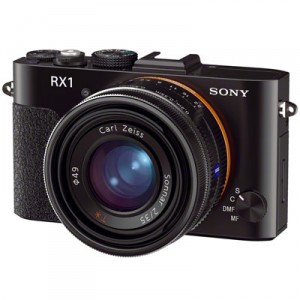
Finally a Compact and I think it would be Sony RX1, a full frame compact.
So those would be my choices if money was no option.
I know a number of photographers who having been thinking long and hard about their gear choices.
Many are downsizing from large heavy DSLR’s to mirror-less, and there is now a mirror-less option for most people, but sometimes one camera cannot do everything.
Richard & Chris Shooting Wildlife
What do I photograph?
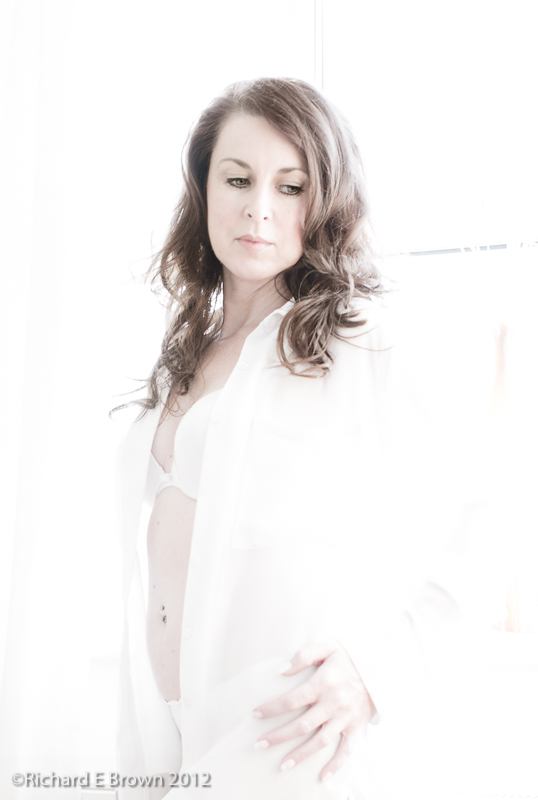
Well my professional work is quite a mix, from model portfolios like the shot below:
to weddings, portraits and even some event photographs like the shots below.
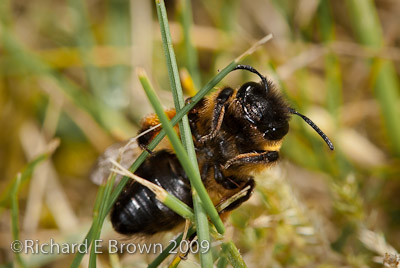
My personal work is landscape especially architectural landscapes and street photography, with a bit of wildlife and macro thrown in for good measure.
Now if you wanted to pick just one camera to do all this work then a professional DSLR would do the job but there are better choices.
Lets look at those subjects again.
Model Portfolios – Studio Work
I do a lot of studio photography, for myself as well as portraits for people and models. Your after quality, mega pixels, sharpness, a camera that can shoot quickly to respond to a sudden expression that might appear, but as studio flashes recycle slowly fast recovery and fast frame rate are not necessary.
I use an DSLR and keep thinking about upgrading to a D800 to gain the extra mega pixels but a Medium Format Camera would be the best choice. Now I own a Hasselblad Medium Format Camera but currently cannot justify the cost of a digital back. If money was no option then I would add a Leica S with a wide angle lens and a mid telephoto lens.
Weddings
Before digital most professionals used Medium Format, now its mainly Canon shooters with the great 5D; since the Nikon D3 and its high iso performance many now also use these. It can be dark in some of these churches. Shooting people can be an art and its interesting how people react to large cameras, a big digital SLR can put people off. Thats where Medium Format cameras with waist level finders come in, they can relax people more.
Event Photography
This depends on the subject, I have shot parties, corporate events, even horse riding. Here a good all rounder is needed and no camera is a better all-rounder then the Digital SLR.
Landscapes
For landscapes think big. Medium Format or even Large Format. Tilt and shift lens or a camera with movements can also help. Here I use either my Hasselblad or Ebony.
Street Photography
For years people have used Leica’s for this. There is something to be said for a small camera. People react better. I know a professional studio photographer who uses a Leica in the studio instead of his digital Medium Format Camera. He feels the models react better. I also know a Wedding photographer who uses a Leica for the same reason. Also if shooting during the ceremony mirror-less cameras like the Leica are very quiet.
Macro Photography
Here the SLR rules, while some do use medium format and there are work-arounds available for others and live view is a major advantage to this kind of work.
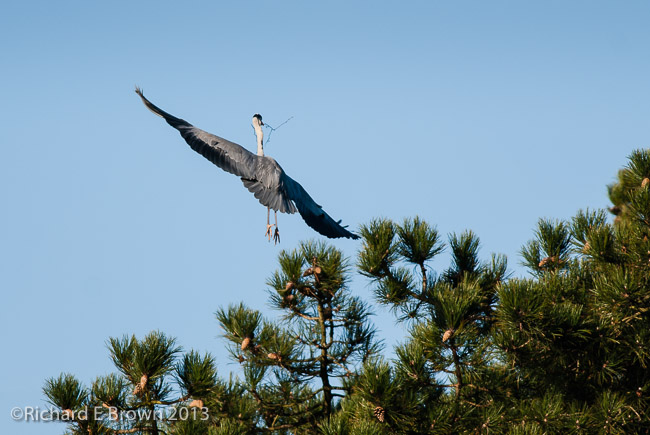
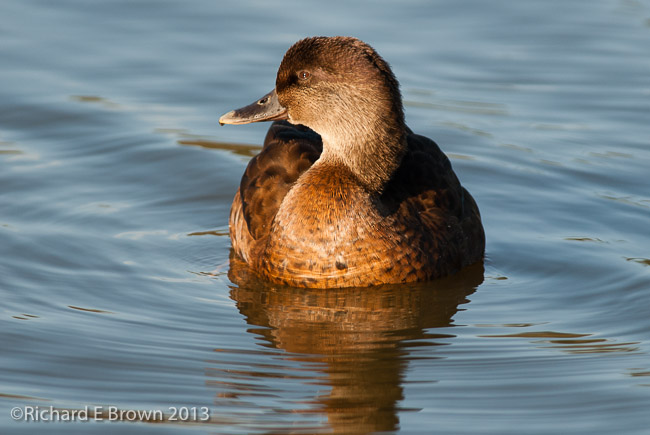
Wildlife
Once again the SLR is king. There may be certain subjects where other cameras may give you an advantage generally the SLR rules. While you can sometimes get good images like the one below which was taken with a Nikon D200 and a 200mm f/2.8 lens with a x1.4 teleconverter, bigger is better, and a Nikon D3s with a 800mm f/4 lens is hard to beat.
So what cameras should I own
Model Portfolios – Studio Work
Best: Medium Format
General: Digital SLR
Alternative: Mirror-less
Weddings
Best: Medium Format
General: Digital SLR
Alternative: Mirror-less
Event Photography
Best: Digital SLR
General: Mirror-less
Landscapes
Best: Large Format
General: Medium Format
Alternative: Digital SLR or Mirror-less
Street Photography
Best: Mirror-less
General: Digital SLR
Alternative: Medium Format
Macro Photography
Best: Digital SLR
General: Medium Format
Alternative: Mirror-less
Wildlife
Best: Digital SLR
General: Mirror-less
Alternative: Medium Format
Looking at this list and what I shoot professionally and personally, then a digital Medium Format Camera is what I should be using for most of my work, with possibly a Leica acting as the mirror-less option.
Problem with all that is cost. With good digital Medium Format cameras at £20k and the lens at £5k a pop its just not an option. So I will keep looking at second hand digital backs to add to my old Hasselblad. Until then I will continue to use the good all rounder, the SLR. I will start using the Leica for none essential work as the quality is very high, but its slower and sometimes automation can help.
For Landscapes, using film on my Medium Format and Large Format Cameras is still a good option, even using the Leica is a good choice.
Looks like an excuse to keep all my current cameras!
I would like to replace one of the D200’s, there are getting old now and the ISO performance when shooting Weddings and Wildlife is not always what I would like, but what with? Well thats a discussion for another day.
With the weather proving an interesting back drop and Chris wanted to practice some bird photography, I packed my largest heaviest tripod, my longest lens together with my Nikon D200 and a Leica M4 for snapshots and headed out to our local park, Hartsholme.
After the snow of Friday, the roads were well cleared but the park still looked lovely in its white cloak.
I decided on a late start and Chris’s car was already in the car park. Dressed in warm winter clothing, my tripod with D200 mounted over my right shoulder and my Leica M4 over my left, I headed out to the lake.
Light was relatively poor and I was having to shoot close to the limits of my ISO for the D200. The poor light, strong contrast from the snow and darkness of the trees, the images looked Black & White. The shot above I actually converted to Black & White and increased the contrast, hoping to make an average image slightly more Arty.
As I setup Chris appeared, he had been shooting here a while further along the lake. We then waited to see what would appear.
Birds in flight are very tricky. I set ISO to auto and had the mode set to Shutter priority camera. Depending on what the action was, I switched the shutter speed from 1/125s to 1/800s.
A lot of my early shots were blurred, or out of focus but as the morning progressed I gradually began to get my technique back.
Wildlife photography is tricky and requires a good knowledge of your camera, how to configure its autofocus, auto iso and modes to increase your chance to get the shots you want.
Its not just knowing your equipment but you can greatly increase your chances of getting a good shot by knowing your location and knowing your subject well.
A cold but enjoyable day and considering the lighting conditions and my lack of practice I am quite pleased with my results.
New, gear new lens, there is always something we want. Most of us would do far better to just go out more and shoot what we enjoy and learn to use the equipment we have.
Just watched a great video called signal to noise on Zackarias.com, an enjoyable video on whats important.
Are you going out shooting this weekend or dreaming of that Nikon D5 that does not exist yet that will finally solve your perceived issues.
Whitby is one of our top three holiday destinations in England. When we visited a few months ago there had been a landslip, resulting in some houses having to be demolished.
Last week there has been another landslip, this time near the church. See the BBC news website for more details.
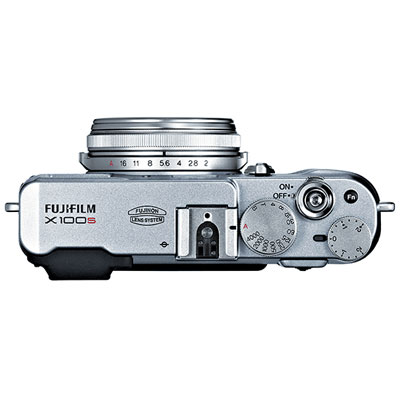
As expected Nikon announced more cameras in the Nikon 1 system and Fuji announced the replacement to the X100 and the X10 with the X100s and X20.
I was a little wrong with my Nikon predictions, I thought the new S model would sit between the J and V models but it seems the new S model is basically a dumbed down J1, so we now have the S1, the mid-range J3 and the V2. The V2 is a nice improvement to the V1, the controls are much better, but its not enough of an improvement to tempt me to upgrade from my V1.
All the exciting news so far has been from Fuji.
The key improvements needed for the X100 was in focus. With faster focus promised and focus peaking and a spilt field view for manual focus it will help those who need manual focus for critical detail.
Its hoped that the new features that depend on firmware will find themselves into cameras like the Fuji X-Pro1. This is a camera that needs features to improve manual focus. Photographers with classic old lens, especially people with Leica M glass are crying out for a cheaper option to use this glass on.
If your a fan of fast glass then you have heard of the sublime
Leica 50mm f0.95 Noctilux.
Well its price is as impressive as its aperture, so out of the question for most users.
There is a more affordable option from SLR Magic who have now released new versions of there more affordable options. The 35mm f/0.95 and the 35mm f/1.4.
These are designed for MicroFourThird Camera’s the Sony NEX and Fuji X range. While they have the Leica M mount they are not designed for the Leica but with that mount allow you to use an adapter to suite what every small mirror-less camera system you need.
They also produce a version for the Leica M series of cameras but being designed for full frame it is considerably more expensive.
If you interested in lens from SLR Magic check out Steve Huff’s website for more information.
Star Gazing Live starts tonight on the BBC, always worth a watch. If you have a telescope or even a pair of binoculars you will be amazed at what you can see on a clear night.
Even a modest camera when combined with a tripod can also produce some fine astronomical images.
Like most photographers me and Chris have a large selection of Camera Bags. Recently we got together and had a bit of a compare of our latest street gear. We both have added new bags to our kit recently. Chris went with the very well regarded Billingham Hadley Pro, which is a great camera bag. I went a slightly different path. A Leather Scaramanga Satchel. Not a dedicated camera bag, but quite capable of holding a iPad or 11″ MacBook Air and a Leica and spare lens, battery and X-Rite Colour Checker. If packing my Leica M4 instead of my M8 then I can also easily fit in a light meter and spare film.
With street shooting, fitting into the background is key. Small mirrorless cameras are ideal for this, especially ones such as the Fuji X100, Fuji X-Pro1 and the Leica M range. These cameras have optical viewfinders that show greater then 100% of the field of view. This enables you to see what is about to leave and enter the field of view, enabling you to pick the decisive moment.
Also as part of fitting in, not only the the small none threatening camera but also a camera bag that does not look like a camera bag. Our two bags in the top photograph are very good examples of this type.
The Fuji X series have received a mixed review. The image quality is certainly high but there is some controversy over the none standard Bayer filter. The biggest complaint I hear is the focusing, but with the model I tested with the V2 firmware, indoor under poor artificial light it did a great job.
Subject to the weather i’ll hitting the street tomorrow to shoot a roll of film with my trusty Leica M4 and leather satchel bag, hopefully that we get me my picture of the month for January.
But I think I got there, I certainly have lots of stunning shots to choose from, lots of Landscapes and this year I did a lot of street photography.
For 2, and 3, unfortunately I did not get round to getting the shots. I did manage to find the location and had short listed and tested a model but unfortunately our calendars never matched. I’ll be testing a few more models in the coming three months with the hope to getting the shots this spring.
The film side went well. I shot a lot film on my Large Format Ebony, and my Medium Format Hasselblad as well as on my Leica M4.