First Wildlife Practice Trip of 2013

With the weather proving an interesting back drop and Chris wanted to practice some bird photography, I packed my largest heaviest tripod, my longest lens together with my Nikon D200 and a Leica M4 for snapshots and headed out to our local park, Hartsholme.

flight over ice

After the snow of Friday, the roads were well cleared but the park still looked lovely in its white cloak.

I decided on a late start and Chris’s car was already in the car park. Dressed in warm winter clothing, my tripod with D200 mounted over my right shoulder and my Leica M4 over my left, I headed out to the lake.

Birds as Art

Light was relatively poor and I was having to shoot close to the limits of my ISO for the D200.  The poor light, strong contrast from the snow and darkness of the trees, the images looked Black & White.  The shot above I actually converted to Black & White and increased the contrast, hoping to make an average image slightly more Arty.

Gull in Flight - 2

As I setup Chris appeared, he had been shooting here a while further along the lake.  We then waited to see what would appear.

Gull in Flight - 1

Birds in flight are very tricky.  I set ISO to auto and had the mode set to Shutter priority camera.  Depending on what the action was, I switched the shutter speed from 1/125s to 1/800s.

Gulls over Ice

A lot of my early shots were blurred, or out of focus but as the morning progressed I gradually began to get my technique back.

Duck on Ice

Wildlife photography is tricky and requires a good knowledge of your camera, how to configure its autofocus, auto iso and modes to increase your chance to get the shots you want.

Its not just knowing your equipment but you can greatly increase your chances of getting a good shot by knowing your location and knowing your subject well.

A cold but enjoyable day and considering the lighting conditions and my lack of practice I am quite pleased with my results.

Focus on whats important

Camera Strap & Light MeterNew, gear new lens, there is always something we want.  Most of us would do far better to just go out more and shoot what we enjoy and learn to use the equipment we have.

Just watched a great video called signal to noise on Zackarias.com, an enjoyable video on whats important.

Are you going out shooting this weekend or dreaming of that Nikon D5 that does not exist yet that will finally solve your perceived issues.


Landslips at Whitby

Whitby Harbour & ChurchWhitby is one of our top three holiday destinations in England.  When we visited a few months ago there had been a landslip, resulting in some houses having to be demolished.

Last week there has been another landslip, this time near the church.  See the BBC news website for more details.

Lets hope it does not get any worse.

New Camera’s announced so far in 2013

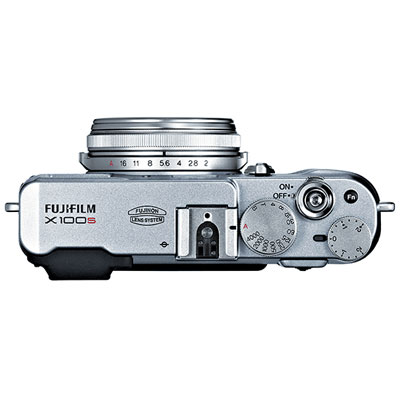
Fuji X100sAs expected Nikon announced  more cameras in the Nikon 1 system and Fuji announced the replacement to the X100 and the X10 with the X100s and X20.

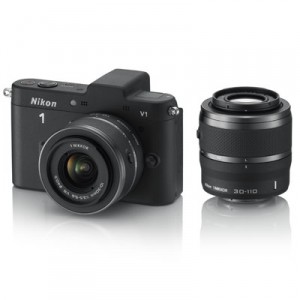
I was a little wrong with my Nikon predictions, I thought the new S model would sit between the J and V models but it seems the new S model is basically a dumbed down J1, so we now have the S1, the mid-range J3 and the V2.  The V2 is a nice improvement to the V1, the controls are much better, but its not enough of an improvement to tempt me to upgrade from my V1.

All the exciting news so far has been from Fuji.

The key improvements needed for the X100 was in focus.  With faster focus promised and focus peaking and a spilt field view for manual focus it will help those who need manual focus for critical detail.

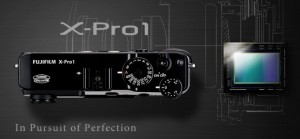
Its hoped that the new features that depend on firmware will find themselves into cameras like the Fuji X-Pro1.  This is a camera that needs features to improve manual focus.  Photographers with classic old lens, especially people with Leica M glass are crying out for a cheaper option to use this glass on.

Winter Riding

mill-0810Saturday morning found me running low on supplies, I was low on strong flour for bread making, so with the weather being cold but fine, it was a great excuse for a ride out on the motorcycle.

First job to check out the bike, tyre pressures, fluids etc, a fairly easy job on the big BMW R1200GS.

Then it was time to equip myself.  Once the weather drops below 12˚C you need to dress well.  Cruising at speeds over 50 mph the windchill can soon make you cold and once cold you loose concentration, not a good idea on a motorcycle.

The temperate over the next few days is forecast to drop considerably and snow is also forecast, this could be my last fun ride for a couple of weeks.

The temperate was 4.5˚C but with wind chill that would feel like -4˚C.  Thermal base layer with a light fleece on top, then I cheated and put on my electric heated waist coat, this plugs into the accessory socket on the GS.

BMW Motorrad Rallye 2 ProWith the full BMW Rallye 2 suit with all its liners in, that would keep me nice and cosy.  I added silk under gloves under my waterproof gloves which together with my heated grips on the bike would keep my hands warm.

With the risk of getting cold minimised I could head out and enjoy the ride to the full.

The first part of the ride was very minor B roads, lots of tight twisty turns, slow going but fun and challenging, I took the opportunity to visit a few local villages and churches that I had not visited before to look out for future photographic opportunities.

For the second part of the trip, I rode a section of what is rated one of the top ten most dangerous roads in Europe.  Personally I think of it as just a fun road.  The problem is that it is too easy to go too fast and some of the corners while they can be taken quickly, its too easy to get sucked in and end up going in to fast at the beginning.  You then end up in the middle of road.  The problem often is there are car drivers coming in the opposite making the same mistake.  So you have a bike straddling the middle of the road and a car doing the same.  Two objects in the same space do not go!

Its better to go in slower then you think then as the corner opens up and you see its clear accelerate hard.  If there is something coming the other way then just tighten your line to keep yourself safe, easy to do if you go in slow.

Once at the Windmill I treated myself to a hot chocolate and bought the large sack of white flour which just fitted into the GS’s top box.

The trip home was just a straight run for home, by this time I was starting to get hungry and looking forward to lunch at home.

A fun, enjoyable and educational bit of riding practice, plus I also found a couple of villages worth going back to with the camera gear.

Dress warm and ride safe, remember:

Keep it sticky side down

Lean Hard into the first corner

The Official Christmas Party

Tonight was the Official Works Christmas Party.

The theme as you may be able to tell was School Disco and many took this as a excuse to dress up.  Free drinks a meal and a chance to let our hair down after a stressful and busy year.

Photography care of my phone.  Considering the poor light the images are quite good, you can see why less and less people are using compact cameras and using there phones.

Noctilux for the Masses

If your a fan of fast glass then you have heard of the sublime
Leica 50mm f0.95 Noctilux.

Well its price is as impressive as its aperture, so out of the question for most users.

There is a more affordable option from SLR Magic who have now released new versions of there more affordable options.  The 35mm f/0.95 and the 35mm f/1.4.

These are designed for MicroFourThird Camera’s the Sony NEX and Fuji X range.  While they have the Leica M mount they are not designed for the Leica but with that mount allow you to use an adapter to suite what every small mirror-less camera system you need.

They also produce a version for the Leica M series of cameras but being designed for full frame it is considerably more expensive.

If you interested in lens from SLR Magic check out Steve Huff’s website for more information.

http://www.stevehuffphoto.com/2012/12/29/the-new-slr-magic-hyperprime-35mm-t0-95-and-35-t1-4-arrives-for-testing/

http://www.stevehuffphoto.com/2012/02/04/the-slr-magic-hyperprime-50-lm-t0-95-leica-mount-lens-rolling-review/


Star Gazing Live

Star Gazing Live starts tonight on the BBC, always worth a watch.  If you have a telescope or even a pair of binoculars you will be amazed at what you can see on a clear night.

Even a modest camera when combined with a tripod can also produce some fine astronomical images.

Eclipse 2007 Eclipse 2007 Eclipse 2007

Luna Eclipse
Luna Eclipse

MCN: The rules: See and be seen

Spotted this on MCN recently, some interesting Points:

www.motorcyclenews.com


You are blind
That’s the bad news. For small but significant periods of time you are completely incapable of seeing anything at all. Most of the time this is not a problem. But it’s a big problem if another vehicle is about to occupy the same point in space as you.

The good news is that understanding why we sometimes do not see things allows us to adopt defensive strategies that tip the odds in our favour.

Peripheral vision sucks
Only a small part of the retina, in the centre and called the fovea, can see detail. The rest of the retina contributes peripheral vision but cannot resolve detail. Just 20 degrees away from your sightline your visual acuity is reduced by 80%.

To test this, stand 10 metres from a car, look one car’s width to the side and try to read the number plate. Try again from 5m. Technically, you are blind to detail in your peripheral vision. But it is very good at detecting movement.

Focus
Unfortunately, if you are going to collide with another moving object, and you are both travelling on a straight path, there is no apparent movement to the occupant of either vehicle. That is, to each the other will remain in exactly the same position until impact.

There is no relative movement – so our peripheral vision is not suited to detecting it. To have a good chance of seeing an object on a collision course, we need to move our eyes, and probably head, to bring it into the centre of our vision.

You cannot scan
Our eyes are incapable of moving smoothly across a scene and seeing everything. They move in a series of fast jumps, called saccades, with very short pauses, and it is only during the pauses that an image is processed.

Our brains fill the gaps with peripheral vision and assumption. Test this by looking repeatedly from your right to left eye in a mirror. You will not be able to see your eyes moving. Now have a friend do the same. You will see their eyes moving quite markedly.

This is because your brain actually blocks images received within a saccade. Experiments have shown that it is impossible to see even a flash of light. I am convinced this is the phenomenon behind drivers pulling out on motorcyclists at junctions. If a driver at a junction isn’t looking directly at you… worry!

Slow down
By changing your speed as you approach a junction, even when the road seems clear, you can help to create relative movement between you and another vehicle approaching the same junction at a constant speed.

If a driver has failed to see you directly, he’s then more likely to spot you in his peripheral vision.

Beware windscreen pillars
Research has shown that we tend not to look near to the edges of a framed scene. In a car the frame is the windscreen. So not only do the pillars represent a physical blind spot, but the driver will also tend not to fixate near to them, leading to an even bigger jump, or saccade, around them.

This is called windscreen zoning. Remember this when a windscreen pillar is between you and a driver’s face.

Assume something is there
Just when you thought it couldn’t get any worse, your brain is also less likely to register something you are not expecting to see.

Here we’re entering a scary territory referred to as ‘aviation psychology’. Suffice to say that if you think the road is empty, you are less likely to see a vehicle actually present.

Look methodically
When you look left and right at a junction, always deliberately focus on at least three different spots along the road in each direction – close, middle-distance and far.

With practice, this can still be accomplished quickly, and each pause is only for a fraction of a second. It means you are overriding the natural limitations of the eye and brain. Fighter pilots call this a ‘lookout scan’ and it is vital to their survival.

Look twice
Always look right and left at least twice. If you repeat the same lookout scan, which you will with practice, any vehicle masked by a saccade on the first look is less likely to be missed on the second.

This does not apply if you charge into a junction at a constant speed. Then a vehicle on a collision course will stay in the same relative position in your vision – if you miss it the first time, you will probably miss it the second time too.

Think: where is 
the sun?
It’s generally understood that low sun can make it difficult to see, but not why: driving into sun reduces contrast, especially when vehicles with a small profile fall into the shadow of larger objects. Even large vehicles, but especially smaller ones like motorbikes, can become hidden.

Range Finder Style Shooting – Street Style

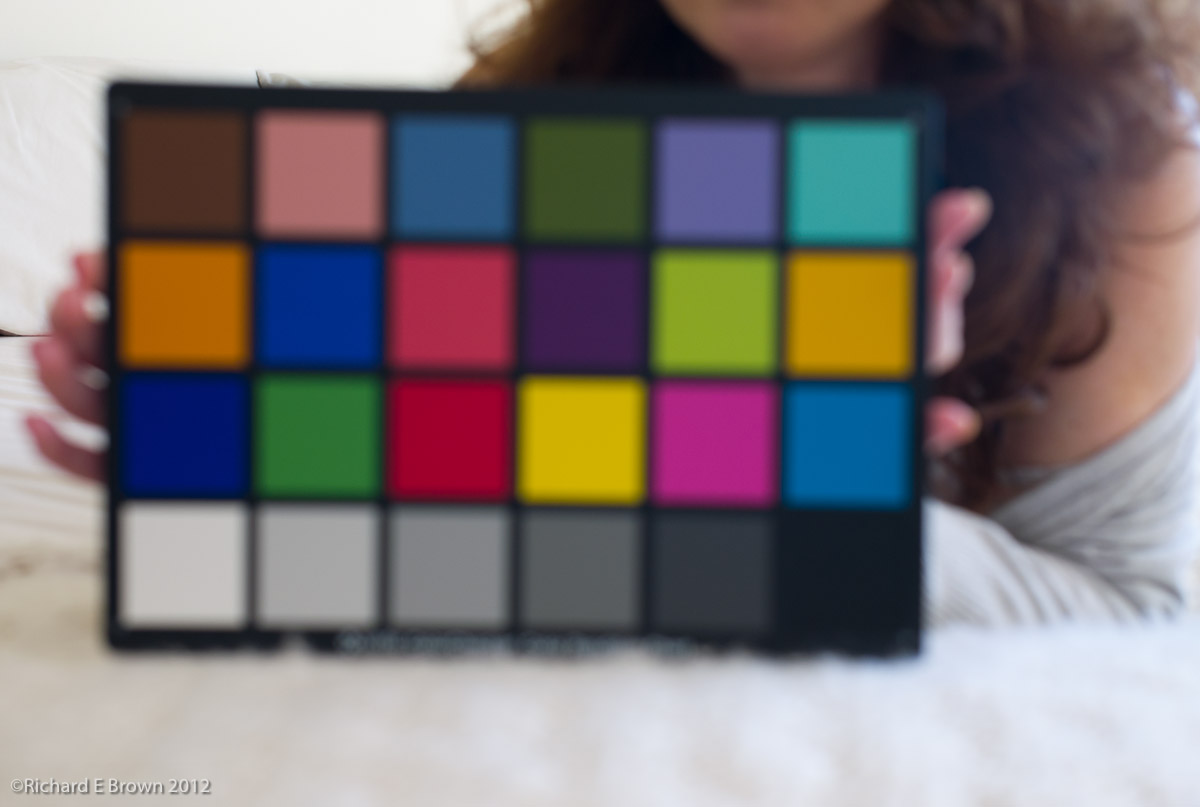
Like most photographers me and Chris have a large selection of Camera Bags.  Recently we got together and had a bit of a compare of our latest street gear.  We both have added new bags to our kit recently.  Chris went with the very well regarded Billingham Hadley Pro, which is a great camera bag.  I went a slightly different path.  A Leather Scaramanga Satchel.  Not a dedicated camera bag, but quite capable of holding a iPad or 11″ MacBook Air and a Leica and spare lens, battery and X-Rite Colour Checker.  If packing my Leica M4 instead of my M8 then I can also easily fit in a light meter and spare film.

With street shooting, fitting into the background is key.  Small mirrorless cameras are ideal for this, especially ones such as the Fuji X100, Fuji X-Pro1 and the Leica M range.  These cameras have optical viewfinders that show greater then 100% of the field of view.  This enables you to see what is about to leave and enter the field of view, enabling you to pick the decisive moment.

Also as part of fitting in, not only the the small none threatening camera but also a camera bag that does not look like a camera bag.  Our two bags in the top photograph are very good examples of this type.

The Fuji X series have received a mixed review.  The image quality is certainly high but there is some controversy over the none standard Bayer filter.  The biggest complaint I hear is the focusing, but with the model I tested with the V2 firmware, indoor under poor artificial light it did a great job.

If your interested in the Fuji, check out Chris Bennett’s Photo Blog.

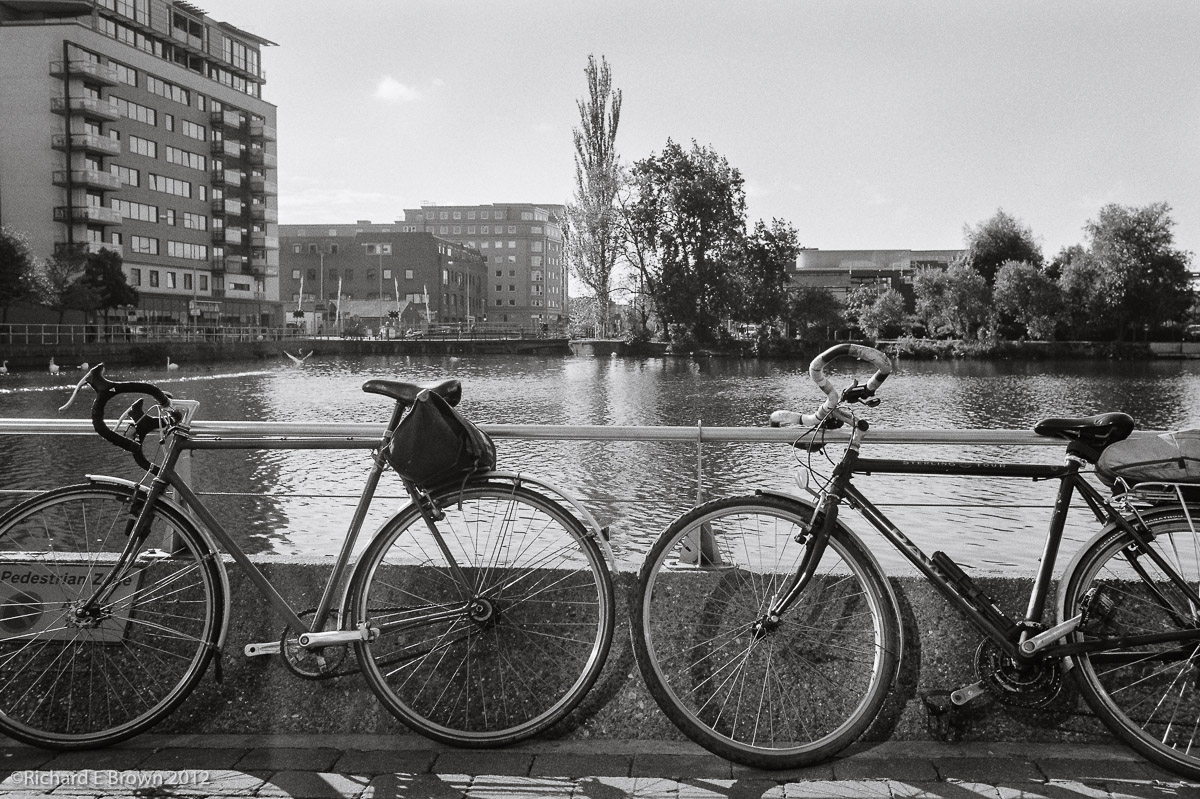
Subject to the weather i’ll hitting the street tomorrow to shoot a roll of film with my trusty Leica M4 and leather satchel bag, hopefully that we get me my picture of the month for January.