Commuting in Freezing Fog

Trees, Mist and SnowThere is freezing fog out there today in rural Lincolnshire and you might find us motorcyclists travelling a little slower the you expect or would like.

Bare with us.  Visors are hard to keep clear in this type of weather and we can see a lot less then you can in your cars, vans and lorries.

Still lets hope it brings us some interesting photographic opportunities.


Wildlife again – is Spring in the Air?

Great Crested Grebe
Great Crested Grebe

Yesterday was my third trip of the year to photograph some wildlife. I was intending to visit Whisby Nature Reserve as its now been about eight months since I last visited.

Chris was also going to meet me there but was unable to make it, and I only had a couple of hours as we were meeting my Nephew and Nieces to help eat Ethan’s Birthday Cake later in the morning, so I only had a couple hours and it had to be nearby.

I decided to visit the old faithful site, Hartsholme Park. With it now approaching Spring I expected the Herons to be there repairing their nests.

Coot
Coot

On parking up I loaded up with the minimum of equipment. Nikon DSLR, a D200 with Grip and extra battery. A TC17 Extender, which multiplies your affective focal length by x1.7 but looses you a stop and a half of light (Nikon also do a TC14 (1 stop loss) & TC20 (2 stop loss). My lens was my new Nikkor 300mm f/2.8, with a Kirk foot and my Gitzo Systematic GT5561SGT Tripod and lastly a Really Right Stuff BH-55 ballhead with B2 AS II clamp.

D200, 300mm & Gitzo

As you can see a big heavy lens, heavy tripod and a heavy duty ball head. A 300mm f/2.8 is about the biggest lens you can cope with on a BH-55 ball head. If you go any bigger or longer you would need a dedicated Wimberley Head.

Wimblerley Head

Certainly if I wanted to shoot bigger I would hire a lens, but would also have to budget for a Kirk foot and a Wimberley Head, so your first hire would not be a cheap affair.

Moorhen
Moorhen

With the camera and lens mounted on the tripod and the tripod carried over my shoulder, I made my way slowly to the lake. I was distracted for a short while by a small patch of woodland which had a number of finches in it, but due to low light levels and there fast movement I was unable to get a decent shot.

Canadian Goose attacking rivals

As I approached the lake I spotted a number of Herons in flight so I was hopeful I would get a few good shots.

Canadian Goose - Take off

I soon setup, and once I was ready to shoot the Herons disappeared into the trees. Typical, but in the distance I spotted a couple of Great Crested Grebes.

They gradually made there way towards me and started to display near to the bank on my right. It was a little dim and the overhanging branches gave me a little trouble with my colour balance but as you can see from the very top shot, I managed to get a pleasing photograph of them displaying to each other.
Heron in Flight

I kept an eye out for the Herons and was eventually treated to a fly past. They seemed to be collecting twigs to repair their nests. Unfortunately they rarely came close so the shot above was about the only decent Heron Photograph of the session.

Male Tufted Duck

There were lots of Black Headed Gulls and some Coots and Moorhens but I kept concentrating on the Herons and Grebes. After a while a large number of Canada goose arrived. They were being extremely aggressive towards each other, proving their dominance.

Female Tufted Duck
Female Tufted Duck

While the Geese were chasing each other I spotted two male and one female Tufted Ducks. Towards the end of my session they gradually worked there way towards me and I managed to get a some good shots of them. I did try to capture one of the males with the female but I could not get them both in focus. A 300mm lens does not have a lot of depth of field so unless there both in the same plane of focus its tough to get the two birds in focus.

A good day and of my three trips out shooting wildlife this year, one of the best. What made it successful was two things. A good selection of wildlife willing to swim and fly close to where I was based and more importantly good light.

The light enabled me to capture a number of shots at the base ISO and at f/6.7 – f/8. One does have to work fast and have ones wits about you. Its one thing shooting a stationary bird in good light at say 1/60s f/8 and 100iso, but moments later you might need to shoot wide open at 1/750s at 800iso or higher. You need to know your camera well and be able to work fast.

It is practice sessions like this that will enable me, hopefully to get some good wildlife shots later in the year when I visit some more exotic locations.

Picking a Lens 3

Highlights

Yes, one last post on the subject of Lens.  In my last post on lens I mentioned four lens which would enable you to do 99% of most photographic tasks.

  • Nikkor 14-24mm f/2.8
  • Nikkor 24-70mm f/2.8
  • Nikkor 50mm f/1.4
  • Nikkor 70-200mm f/2.8

Now of these lens I own four of them.  Instead of the 14-24mm f/2.8 I have the DX version a 12-24mm f/4.  When I finally upgrade my DSLR bodies to full frame then the 14-24 f/2.8 will definitely be on the list.

The photograph at the top of this post was actually taken with a consumer zoom set to 70mm before I owned my 24-70mm f/2.8. Many consumer lens are very good if used stopped.

In a studio with mains powered flash head shooting at f/8 where most consumer lens perform very well, is not a problem. What does make things more difficult is that most studios are quite dimly lit.  This is so you can see the affects of the modelling lights, and a consumer lens which at its long end may only be f/5.6 can struggle to auto focus at those low light levels.

Andrew in a Wetsuit

The majority of my portraits which I shoot with DSLR’s are taken with two lens, the 24-70mm or like in the shot above the 70-200mm.

So if the lens I listed above can handle 99% of my work, why did I mention the other lens in the original post and why.

Lets remind ourselves what lens I picked.

  • 20mm f/2.8 Superwide
  • 24mm f/3.5 PC Lens
  • 35mm f/1.4
  • 85mm f/1.4
  • 105mm f/2.8 Macro
  • 300 f/2.8

There was also one I missed the 200mm f/2

In many ways the 20mm is the odd one.  Its a lens that I have long coveted but today you are possibly better served by the 14-24mm.  Its advantage is weight, if you want a very wide angle and want to travel light its a better option for some people.  Its a lot smaller and easier to use then the zoom and can use normal filters which the zoom will not take.

The 24mm is a very specialist lens with it being a PC – Perspective Control Lens.  For lovers of Architectural Photography a PC lens is a must for keeping your Angles straight.

The 35mm f/1.4 is a favourite focal length for me and one that I consider my standard lens.  Its also the focal length I use most on my 35mm Leica as well.

The 85mm f/1.4 is the typical focal length for portraiture and with its fast aperture can give you a lovely dreamy out of focus background.

Flowers

The 105mm is my macro lens, together with my macro flash kit, it enables me to get some stunning close up photographs.

Bee

The lens I missed originally was the 200mm f/2, this again is a stunning portrait lens for head shots and with an aperture of f/2 enables you to get the eyes sharp but then have the rest of the face drift gently out of focus.

Lastly I had the 300mm f/2.8 lens on the list.  The longest lens used by fashion and studio photographers, its also the shortest lens for wildlife photography and possibly for most photographers the most affordable fast long lens.  Though affordable is a relative term.

Now this set of posts about lens has been very 35mm DSLR focused.  If I was picking lens for for say a Leica M then my choices would be different.  This series of articles has also been very Nikon biased as I am a Nikon DSLR user, if your after a Canon perspective  then check out Chris’s blog post here at CBPhotoblog.com

Multiple Flash Heads

char-1006The general rule in Photography is ‘KISS’, keep it simple stupid.  Often though in the studio it can be easier to introduce another flash head then to not.

The shot above looks deceptively simple but in fact uses a total of seven flash heads!

The key to this sort of thing is to build slowly, start with one light and work with that, then introduce another and continue to experiment and build.

This shot has one main light using a large Elinchrom Rotalux soft box, then a fill light on the other side.  A flash over the top of the model with a small soft-box to act as a hair light; and finally for the background, two flash heads on each side fitted with barn doors to light the back ground.  Yes it sounds over kill but when your in a well equipped studio and have plenty of time you might as well experiment and learn.

Picking a Lens 2 – what would you pick?

So at the bottom of yesterdays post was my list of lens, but whats the basics in most peoples bags.

Well its pretty much what I listed.  Going from wide to long its going to be:

  • Nikkor 14-24mm f/2.8
  • Nikkor 24-70mm f/2.8
  • Nikkor 50mm f/1.4
  • Nikkor 70-200mm f/2.8

From that set you can handle 99% of most photographic opportunities, to that list you then add and specfic lens that suite your photographic style and subject matter.

How about a carry everywhere lens, 24-120mm f/4 sounds about right.

Maybe a specialist lens such as a PC lens or Macro lens.  There are a lot to choose from but the top list of four should suit most people for most uses.

Now think about your photography apart from the lens above which lens would you pick for your photography?

Picking a Lens

1025670Sounds easy does it not. Super Telephoto for wildlife, mild telephoto for portrait and Fashion. Wide Angle for Landscapes, nothing to it.

Well actually no, it’s a lot harder then you may think.

Possibly the easiest choice you might think is if you are a bird photographer, then you want a 800mm lens. Just pop down to your local camera store and pick one up.

One you have picked yourself off the camera store floor after fainting at the price you then start to compromise.

It’s now you start to realise there are a lot of choices to make.

You want a lens that can be used handheld in low light, built in VR or IS, maybe f/2 or faster to let in lots of light, produce those dreamy out of focus backgrounds you like.

You want a zoom that can go from 24-300mm on a full frame camera and is small and easy to carry.

Your shooting Architecture and every line should be straight and perfect.

There are lots of lens out there but your going to have to think long and hard about what you want to photographer and how you work.

If you travel long distances on foot to get to your chosen shot, then a zoom or a couple of light primes maybe better for you back and health, then the thought of carrying the big heavy optically ‘Perfect’ lens, heavy tripod etc.

So for me what would I pick.  Well for me weight is not generally a consideration, I would choose a lens over its optical quality then its convenience or weight.

Well first there are Landscape & Architecture wide angles:

  • 20mm f/2.8 Super Wide Angle or the Nikkor 14-24mm f/2.8
  • 24mm f/3.5 PC Lens
  • 35mm f/1.4

Every Day Standard Lens:

  • 24-70mm f/2.8 Nikkor Zoom
  • 50mm f/1.4

Telephotos suitable for portrait, fashion and wildlife photography:

  • 70-200mm f/2.8
  • 85mm f/1.4
  • 105mm f/2.8 Macro
  • 300 f/2.8

So thats my list, what would you pick?

Revisiting your work with Fresh Eyes

It is always worth while revisiting your shots a few weeks after they were taken.

Often a shot you did not like then, you may like now, or you may want to re-process a shot and take it in a very different direction.

Wildlife

Often with my Landscape shots, I might rework them over a year later, or find a shot that I originally did not rate but now love.

With being stuck in bed for most of last week meant I had have not had time yet to add the keyword data to my last shoot.  Now obversely, there are still shots that are definitely misses.  Some how I managed to get every shot of the Grey Squirrel out of focus or badly famed.

Wildlife-2

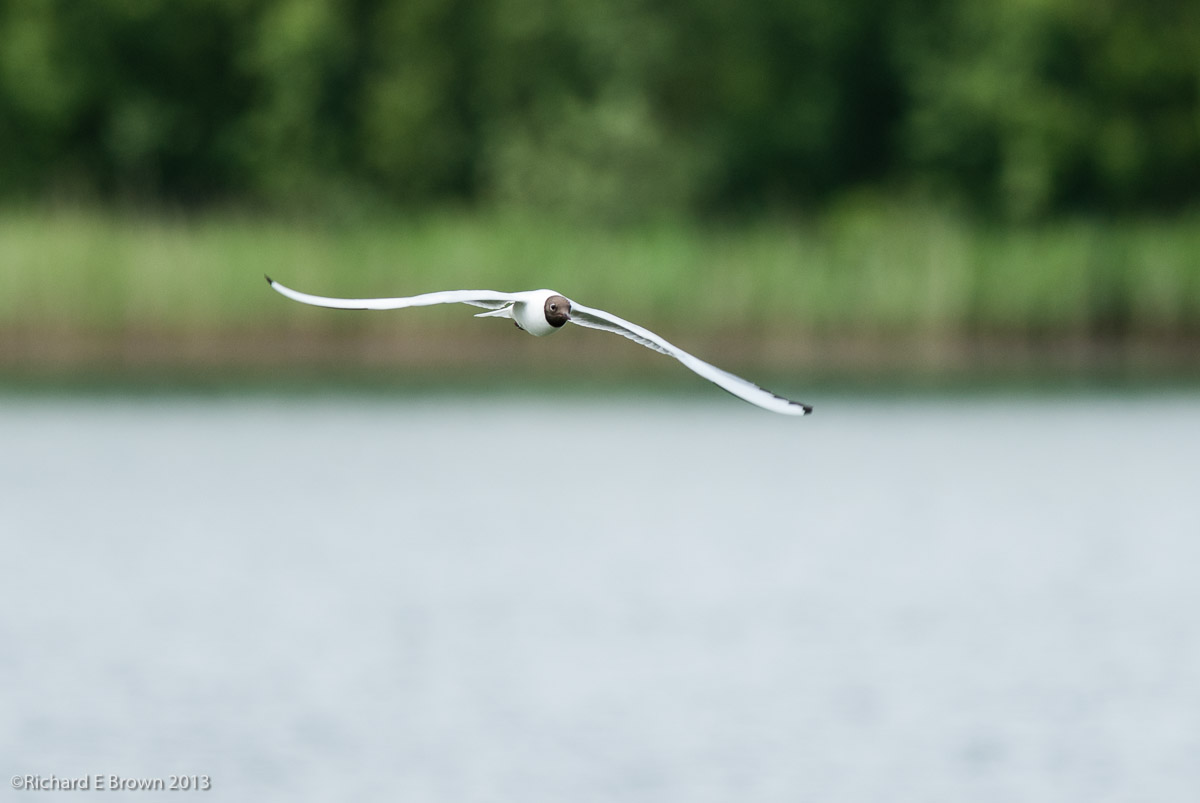
But some of the other shots that I originally dismissed to high noise and being shot into the sun I now find quite pleasing such as the two Black Headed Gulls in the shot above.

Always a reason for never deleting anything in this digital world.

February is here and a fresh start to the Year

Gull coming to LandAfter the Sunday at Boutham Park shooting wildlife, I have spent the last week in bed with a rather bad chest infection.  Not only did the boss send me home on the Monday but even the Doctor sent me to Hospital to get checked out further.

So most of last weeks Blog entries were all pre-written posts as I have spent the time asleep in bed.

This Monday I am now starting to feel better and i’ll be heading back to work on Tuesday now that I can face staring at a computer screen without my head exploding.

I am going to be thinking hard about what I am going to photography this year.  With this I’ll be considering my lens and where I have gaps in my current selection.

I have two trips planned so far, both landscape and wildlife focussed.  The first is a trip to the Forrest of Dean, the second which we will be planning over the next few weeks is a trip to the Shetland Islands.

For the Landscape I have the gear and equipment I need but will lookout for mild large format telephoto, possibly 200-300mm range.  For the SLR, I am going to keep my eye out for something a little longer then my 70-200mm f/2.8 and possibly add another teleconverter.

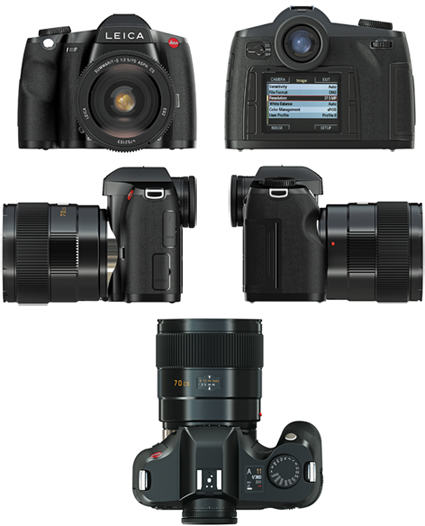
So here as I finishing writing this with one last coughing fit over the keyboard, i’ll also add one more lens into the mix, possibly a Leica 90mm.


Lens to consider this year.

Large format:

210mm or 300mm f/5.6

Digital SLR:

300mm f/2.8 or f/4

200mm /f2

Range Finder:

50mm f/2

90mm f/2