Replacing the Nikon V1 -considering more options

Leica C Compact with a Viewfinder

So last week showed that while generally I could manage with a small high quality compact  with a 28mm or 35mm field of view, there are times when I need more range in a small body.

The Nikon V1 has many issues and Nikon really do not seem to know where they are going with it but my little original V1 with 28mm prime and zooms from 28 to 300mm give me a lot of flexibility.

So this weekend while planning my next studio shoot (which involves water so is rather complex) I also spent some time checking out compacts on the web.

The top two I thought of where the Sony RX10 and the Sony RX100 Mark III.  The RX100 certainly fits the bill on small, and the new Mark III model now has a neat little pop up viewfinder.  Whilst the zoom range does not reach as far as I would like only being 24 to 70mm it really is a fantastic pocket compact that you could always carry with you.

The RX10 has more reach now being 24 to 200mm but I need to handle it and consider the size.  It might be getting a MicroFourThird’s body is a better option and certainly more flexible.

When Monday came I popped into my local camera store the Silver Street London Camera Exchange. I was intrigued by the built in viewfinder of the RX100. Lucky for me they had a mark III in stock as well as a mark II & mark I. Sony, maybe your coming out with new models a little to fast?

For a compact it was very good and with a quick press the EVF popped up then you had to pull the viewing window out and it was read to use. A little fiddley but one of the best, well only (ok there is the Panasonc LF-1 & Leica) EVF on a compact.

Now if your used to high end Sony and Fuji EVF’s this is not as good but it’s the best yet in a compact and the camera is still very pocketable.  The other option to consider is the little Fuji X10 or X20 with its optical viewfinder but smaller sensor.

Still as I keep writing, more choice is good and the options keep growing.

Nikon V1 – another fine job

Nikon V1 10mm f/2.8
Nikon V1 10mm f/2.8

Last week saw me commuting to Lincoln on the bicycle again, its only a 21 mile round trip and very enjoyable, but I also needed to do some personal photography requiring the equivalent of a 300mm field of view lens (on 35mm full frame).

Being on a bicycle with limited luggage space, the little Nikon V1 was perfect for this.

It seems every time I think of replacing the little Nikon V1 for something with either better image quality or better ergonomics a job comes up for which it is perfect for.

Come on Nikon, since the V1, the V2 and V3 have moved backwards, give us a Series 1 Pro. built in EVF and great ergonomics, with the image quality we have grown to love.

Weather stops once in a lifetime opportunity

Battle of Britian Flight

The Canadian Warplane Heritage Museum this week flew their airworthy Lancaster Bomber to England.

On arrival in Bomber County, Lincolnshire, just before it touched down at RAF Coningsby it was due to meet up with the Battle of Britain Memorial Flight and the Red Arrows, and all of them would pass over the iconic Lincoln Cathedral.

I had arranged roof top access to one of the taller buildings in Lincoln and was all set to photograph this once in a lifetime event.  Unfortunately weather delayed their arrival and as they approached Lincolnshire a storm came up from the south forcing them to route direct for Coningsby, this storm also grounded the BBMF thus the event had to be cancelled.

These are the only two flying Lancasters in the world and they have a special connection with Lincoln and Lincolnshire.  I hope they can arrange to fly over the city again and I hope i’ll be ready.

What should Aperture Users do?

Lightroom V5If your after an all in one DAM/RAW processor that enables none destructive editing there are only two products that you should consider these have been, Apples Aperture and Adobe’s Lightroom, both were released at the same time and both have advantages and disadvantages, I even know some photographers who use both.

This summer Apple announced that they would be ending there Aperture product.  Now they do have a replacement coming soon likely to be released together with there new OS this autumn but if its anything like there other software releases recently, its likely to be a step backwards with less functionality at the start.

With this in mind many users are now considering jumping to Adobe’s Lightroom.  Lightroom has always been my preferred product, but if your an Aperture user I would be tempted to wait and see what Apple’s replacement is like before jumping ship.

Adobe have announced that they will be releasing migration tools to help and so far they have released the following white paper:

http://landing.adobe.com/dam/downloads/whitepapers/54511.en.switch-from-aperture-to-lightroom.pdf

Adobe Lightroom V5.6

Adobe CC - LR5.6Well its Friday and the weekend is nearly here.  I have been lazy today, I had no blog prepared but on checking out Chris’s Blog this morning I read that Adobe Lightroom V5.6 had been released, its not long since V5.5 was released.

I’ll let you read up on the updates from the usual sites but Chris’s blog post is here.

You can get it here from Adobe’s site.

If your a creative cloud user remember to update from the Creative Cloud Installer and not from Lightroom Update.


Headshots

Coffee Thoughts

I am always on the lookout for tips to help and improve my photography and I caught this video about Headshots by Frank Doorhof and Peter Hurley.

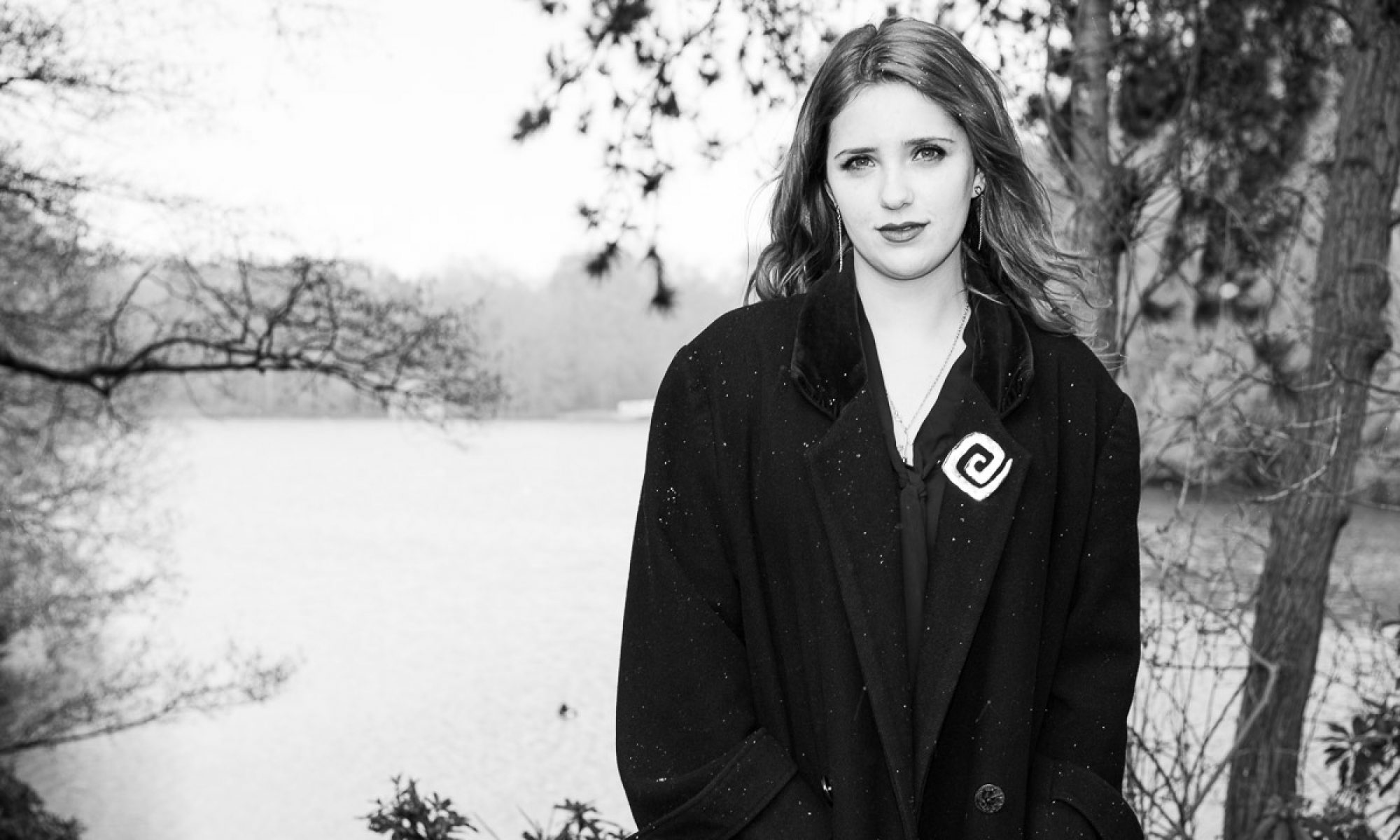
My head shots are generally quite different then those normal posed portraits you see, they are normally candids or more glamour focused but I am always after more tips to try out, whether on the street as above or in the studio as below.

Nikon D200
Nikon D200

Looking at non M Leica’s and other options

Leica X VarioI am forever blogging that I am looking for the perfect compact camera.  As one does not exist I keep considering areas that I am willing to sacrifice, such as ergonomic’s or image quality.

To this end I have spent a good part of this week in between gardening/house work and editing clients photographs investigating the high-end Leica options.

The options currently are:

  • Leica X2 fixed 35mm field of view (24mm, f/2.8, DX sensor)
  • Leica X Vario 28-70mm field of view (18-46mm, f/3.5-6.4, DX sensor)

When the Leica X1 was released it was exceptional and there was nothing like it except Sigma’s DX Foveon compact.

Since the X2 was released we now have lots of large sensor’ed compact and now CSC system cameras just as small.

The pro’s for these are image quality, lens quality, build quality is all very high,.

The cons: X2 is over priced for what you are getting and the Vario while stunning image quality from a great lens is just very slow.  Here in the UK one would constantly be cranking up the ISO.  Also neither have a viewfinder.

Fuji X100sIts interesting that several Leica M shooters I know have gone for the either the Vario, or the Fuji X100s.  I know one review who said the Vario on image quality but the X100s on practicality, the fantastic optical viewfinder, and faster autofocus won him over.  One should note that the photographers that went for the Vario were also based in sunnier climates, though again if your out in the sun and want to use flash the X100s has some fantastic tricks like a built in ND filter and a leaf shutter for high flash sync speeds.

Leica T 701As Fuji have done such a good job borrowing some of the best bits from the Leica M, like the ergonomics and the viewfinder it would be nice if Leica could borrow Fuji’s implementation of the X100s’s viewfinder/evf combination and launch a Leica T Pro?

I have also recently spent some time getting my bicycle back into working order.  I seem to struggle to find time for the gym so now try to cycle into Lincoln once a week which has made me think about cameras that would suite small bicycle bags.  Certainly I would not want to be bothered with too many pieces; carrying a body and viewfinder would be too much. This is where an all in one design like the Fuji X100 score highly.

Comparing Old and New

AliceMy 10 MP Nikon DSLR’s are now very out of date by most peoples thinking.  What has prevented me from upgrading is not the cameras but the support infrastructure.  New batteries (if on a paid shoot I will always have four batteries, two for each body), grips, Arca Swiss mounts and more importantly disk storage and new computers to handle the increased image size.

So while I keep looking at new cameras its not been too serious a look until I refresh my computer equipment.

So far on the short list is a secondhand Nikon D3s; very tempting as no new computer required and the stunning D800 or the new D810, which with their 36 MP RAW files would definitely require a new desktop and laptop computer.

It was while doing some recent research into the new camera that Thom Hogan brought up an interesting point; and that is the moving target of comparing image quality.

The best example of this is of course the Fuji X100s.  When a camera is first released the major RAW processing software producers come out quite quickly with a new version of their software.  Often though it is a few iterations down the road that they really understand the new camera and optimise there software for it.

The Adobe software was not great when dealing with the Fuji X100s files but now does quite a good job, this is not entirely Adobe’s fault, camera manufactures do not work well with the other software developers and want to push there own software.

Its generally only the medium format manufactures that seem to understand this and work well with the major software companies.   This is something that Ricoh and Leica is quite good at too.

When I look at what I can do with a RAW file now in Adobe Lightroom V5 compared to the same image in Adobe Lightroom V1 is night and day.

Now reading some reviews on the D810 people are saying there is not much improvement, now there is some truth to this, once we reached 16 MP cameras the improvements have been quite small and there is a good case for saying that unless your a professional shooting for billboards then 16 MP is more then enough.  Consider that 6 MP will print happily to A4 and how many photographers print much bigger.

But the other thing to consider is that we have had two years of softare companies improving there software and what it can do with D800 RAW files, while its a first attempt  for the D810.

In another two years one will fine the image quality of the D810 to be far better due to improved RAW processing.

Finally one last comment; why do companies keep on going with propriety RAW files.  DNG is an open standard, work with Adobe and lets make all are lives easier!