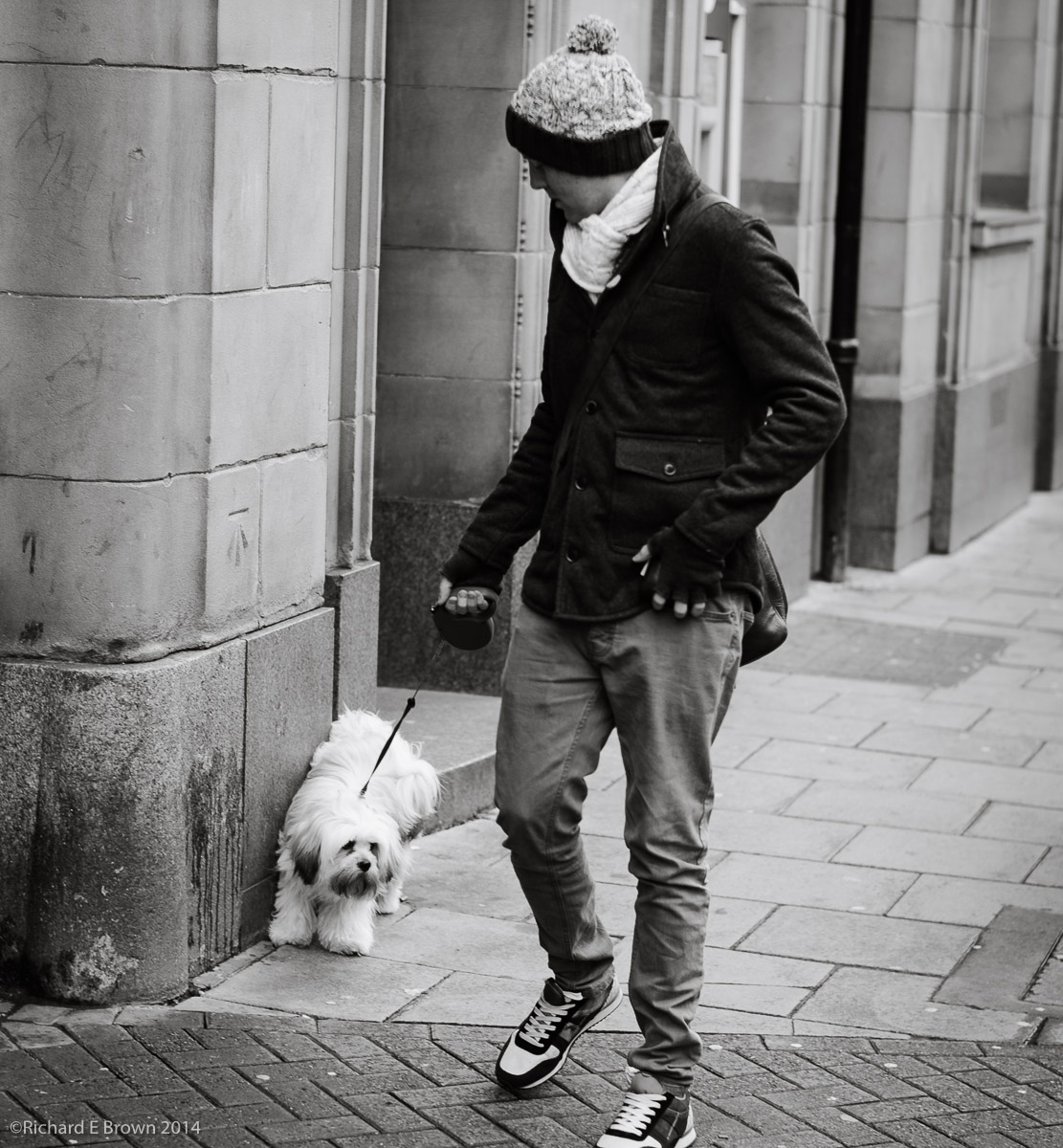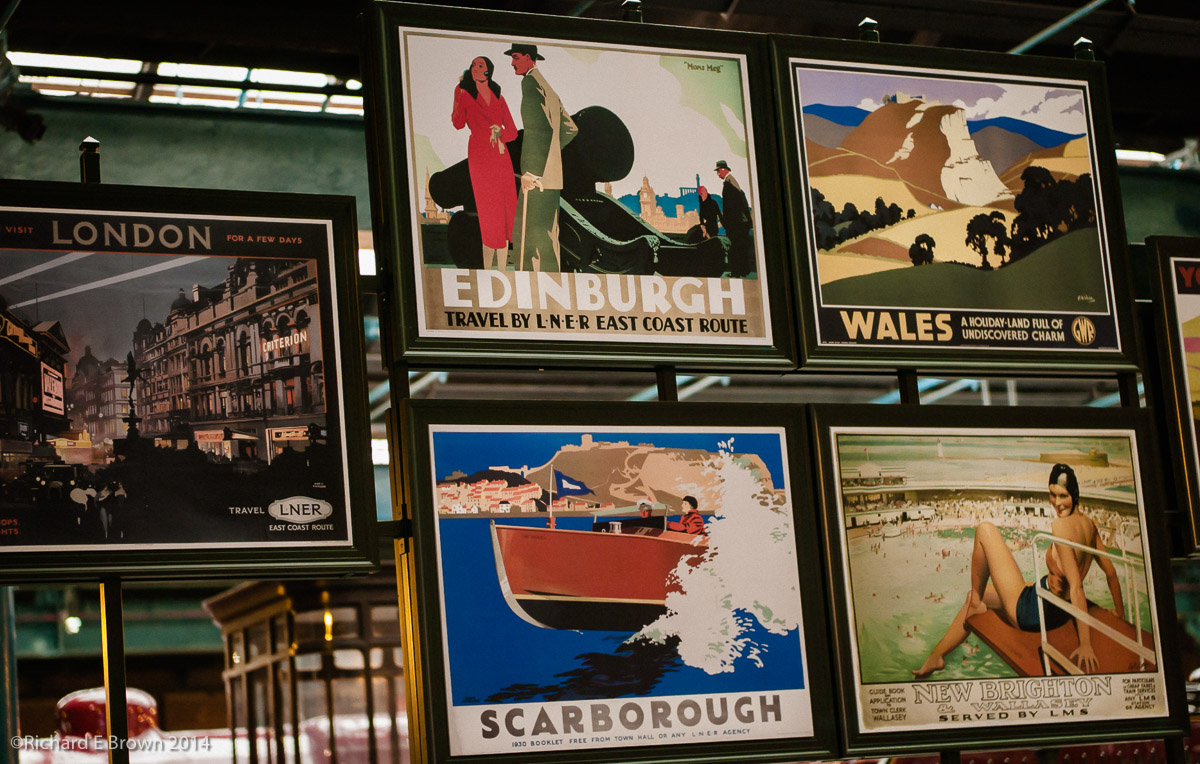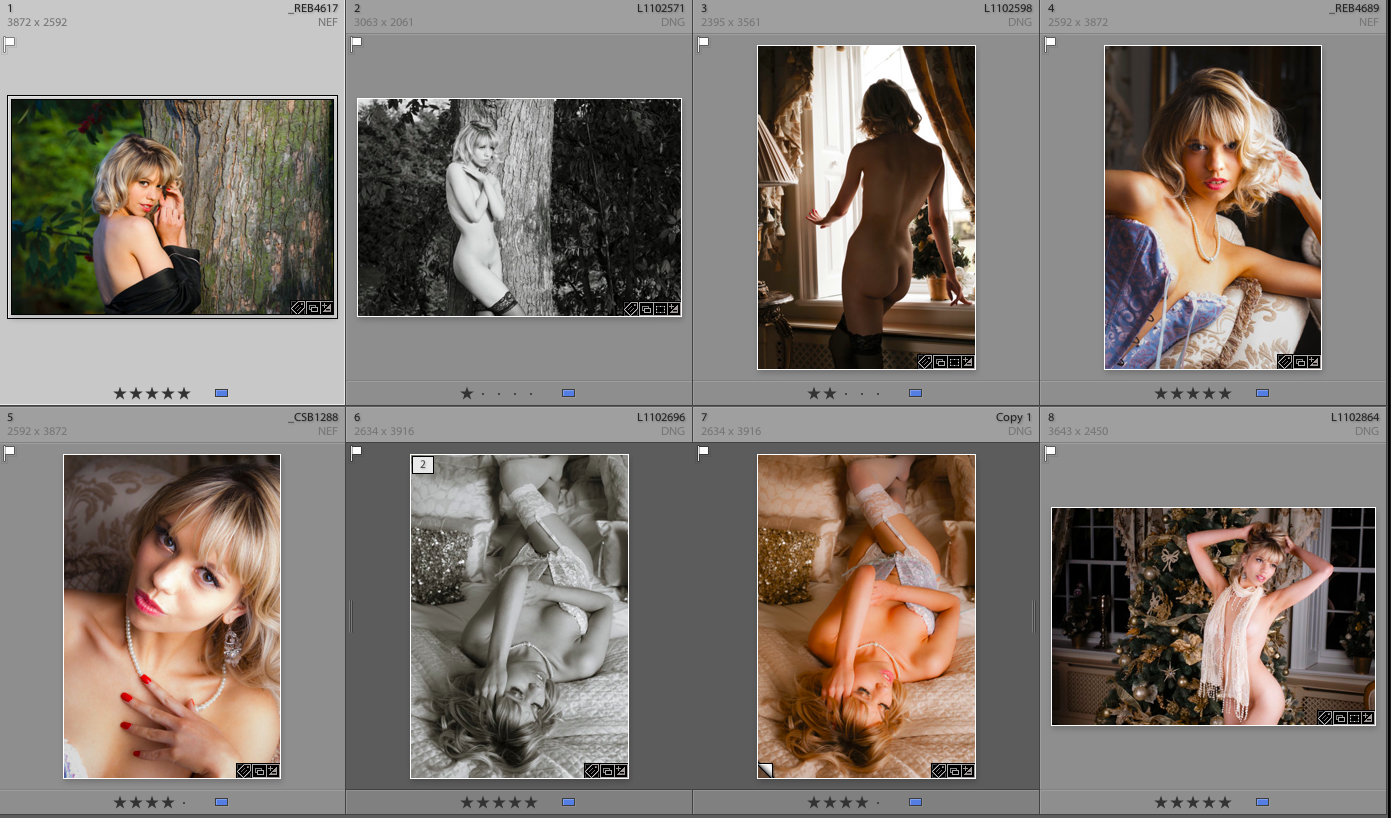
I had a great shoot on Sunday with the lovely Amy, so today I was keen to get some photographs processed and posted up.
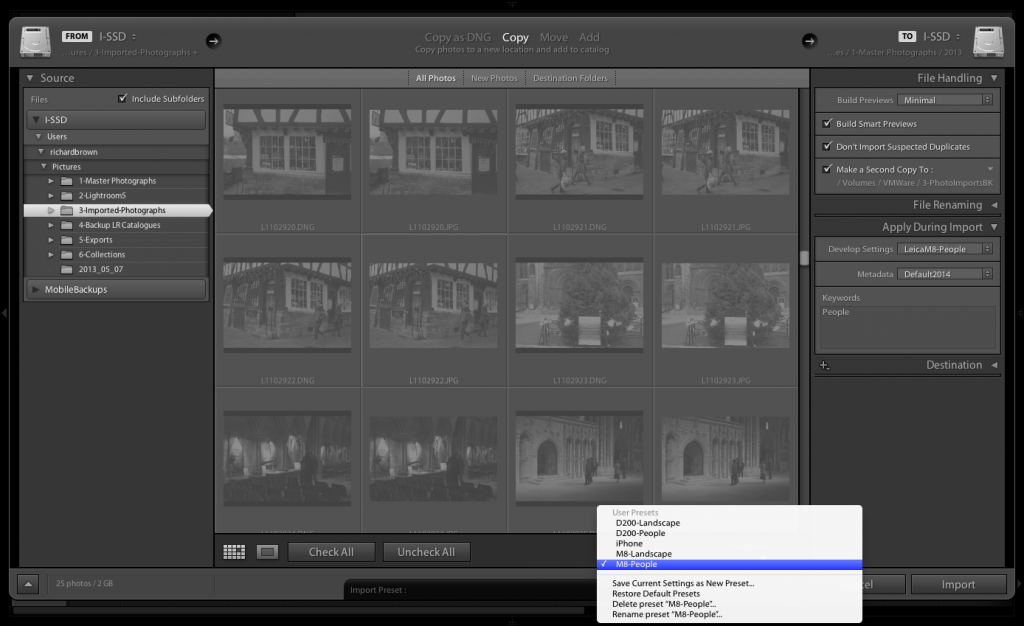
Sunday evening I imported all the photographs and backed everything up. Then Monday I made a quick start editing a couple so I send some to Amy. Then just at the worst time we had a power cut. I had no idea when it would come back so I had to stop and go to work in Lincoln.
Tonight I promised myself to work hard and at least get some basic processing and key wording done. Well Adobe Lightroom V5 would not open, not matter what I tried. My current catalogue and some older catalogues would just hang. I tried the Option-Click trick and opened Lightroom with a fresh new catalogue and that would work, but when I exited, once again Lightroom would hand when I tried to open it, even opening the new catalogue I had just created.
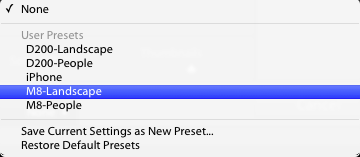
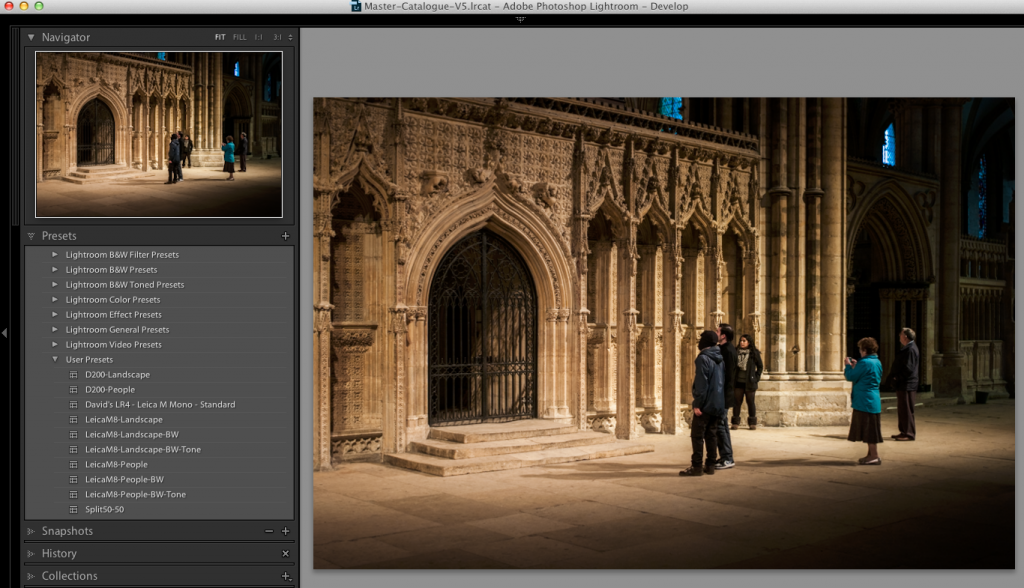
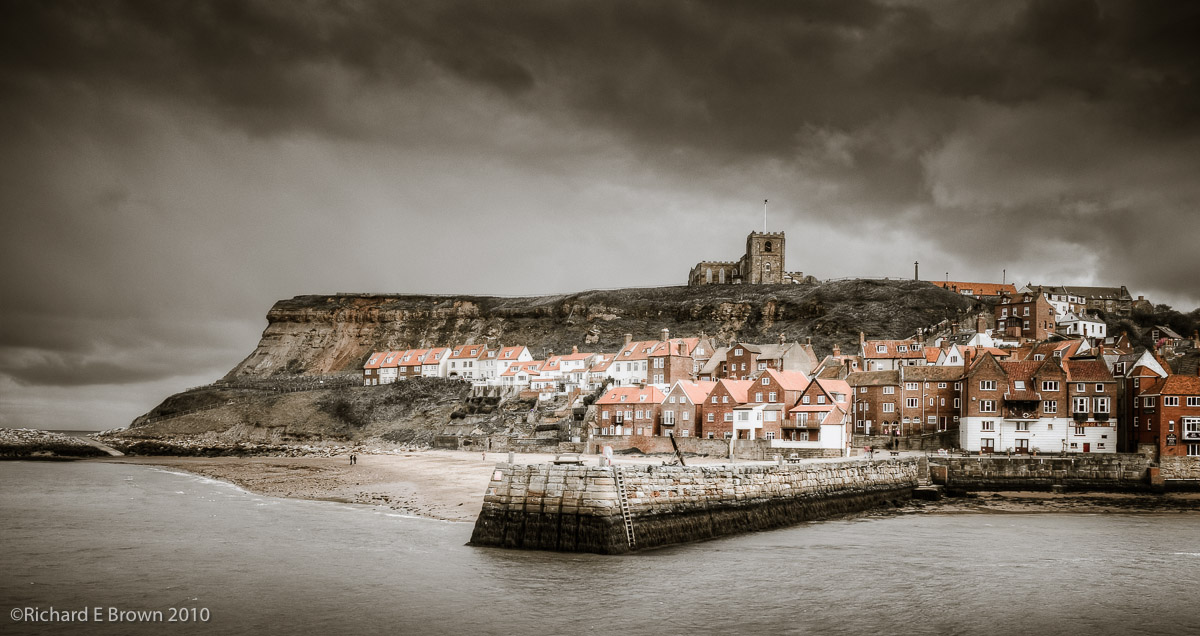
I deleted the preferences and also tried removing the templates as that in the past has caused issues, all to no avail. The trick that finally got things up and working was to Option-Click, create a new catalogue, then while I was in the blank catalogue, go through and disable all my plug-ins. Adobe Lightroom now works and I quickly produced the above image.
I still have to figure out which plug-in is causing the issue but that can wait until another day. I have editing to do.
Sony have really been pushing at the envelope of camera design in the last few years, with DSLR’s with EVF’s, the Sony NEX range with the great NEX-7 and NEX-6 and now the new A7 and A7-R.
One thing I have noticed about these cameras is that I see a lot of pro photographers who have them, using third party glass. While the good glass is slowly coming is been manufacturers like Leica who have made great sales from these cameras.
While shooting wider then 24mm can be troublesome using Leica glass on the Sony as the cameras lack the special micro lens that Leica have developed for the Leica M range, it still gives great results.
While releasing good cameras is one thing its the system that can make or break a camera.
Chris Bennett recent made an interesting blog post about DSLR ver Mirrorless cameras.
In the article he mentioned that I shoot with two Leica’s for my street photography. Since the introduction of the SLR in the sixties the Leica rangefinder and of course range finders in general (I also love the Nikon S) became very much a niche product.
Today Leica is again very popular, but not their cameras, it’s the lens that people love.
With the introduction of the Mirrorless camera many old lens have become popular again. Due to mount design and very small flange distance, just about any lens can be fitted.
But why are Leica lens so popular? Well there are a number of reasons, first the image quality is second to none. Second is the size, three high quality primes easily fit into a large coat pocket.
Leica M4 Film
Of course there are odd people like me who love not only Leica lens but Leica cameras as well. What is it about a Leica that causes people to still use them, effuse about them and generally love them, despite the price.
My M4 has no meter, no auto modes, its as basic as they come. The viewfinder of both the M4 and all Leica M’s for that matter does not show exactly what you will get it in fact shows a lot more depending on lens. I find that when out shooting with the M4 I really have to think hard about my photography. I have to regularly meter with an external light meter, and meter in different directions in Autumn, Winter and Spring. If shooting with the sun behind and then I see something to the side I may have to change the exposure by up to two stops. I have to be fully aware all the time what the light is doing around me.
What then about the M8. This is Leica’s first digital Leica. So it does have some automation. A built in light meter which is basic but functional. You still need to consider what the light is doing and how it may fool the meter.
So using the Leica’s makes me much more aware of what is going on around me and that can only be a good thing, I have to be prepared, have the camera pre-set and pre-focussed. No autofocus on any Leica M.
But what makes an M an M. Well if you know your German, you may know. Messsucher is the German would for Viewfinder and Rangefinder combined which is what a Leica M is and is all about.
If you have ever used a professional full frame Nikon like an D3, or a Medium Format Camera you will realise that since the we got digital viewfinders have been going down hill. The viewfinder in a Leica M is simply brilliant, and by that I mean bright and easy to use and focus. You can see clearly and in low light, more importantly with the frame lines you can see what is about to come into the picture and so pick the decisive moment. I makes capturing these moments even with the lack of automation easier.
The rangefinder is not an easy focusing method, it requires regularly practice, and I find if I have not used the Leica’s for a few weeks it takes me longer to focus then any other method, but once in practice is is surprisingly fast. You may be interested that in the last year of shooting with my M’s I have only one badly focussed picture.
So the Leica M, not a camera for everyone but one that rewards practice and the pictures I take with it, I know are the result of my hard work and not the computer in the camera.
With the house move as well as Caroline having her own sewing and craft room, I have my own office which I use as my digital darkroom. I am still in the process of getting everything set up the way I want but one of the new purchases to make editing easier is my new Wacom Intuos Pro Tablet.
When you talk about Tablets then Wacom are the market leader. Many people love tablets others prefer the mouse. If your thinking of trying one then you have to give it a good try. The analogy I heard was this “For the first week its likely trying to use a paint brush with your feet.”
I have to admit, the first few days were difficult, I could definitely use a mouse or tack pad a lot easier and get better results. I have now been practicing for just over a week, a mix of just messing about, plus some actual serious editing in Adobe Lightroom and Adobe Photoshop, but as well as that, I have been using it for just general web browsing and controlling the computer. I am now getting to the point where it is starting to get to feel natural.
This weekend I gave it a good try out in Adobe Illustrator, I made a scale plan of the bottom of the back garden so I could start to make a plan of where to site the chicken coup and bee hives to fit in with the current garden layout as I wanted to leave the main tree and statue that we have at the back. It was my first time using Adobe Illustrator and its a very odd program. Like its name sake Adobe Photoshop it has a very steep learning curve. I watched a few tutorial videos on the internet but it is still a very confusing program for a beginner like me to get the hang off. Still it allowed me to use use the tablet while I concentrated on the program.
The quick arctic blast came and went. It started with a minor frost in the morning so did not effect the commute into Lincoln. The evening was another matter, travelling home in -2.5C at night on country roads is no fun. Still it makes the photography interesting. The frosty lincoln west common with low sun through the trees looked very pretty.
I often see nice photo opportunities when stuck on my morning commute. They never seem quite as nice when I go back with some free time and a camera. Such is a photographers life.
It’s quite some time since I spent a day in the studio so I am going to plan a session in early December. So if your a model feel free to get in contact.
There always seems to be a never ending list of job to be completed when moving house.
This weekend saw us finally empty the storage units, so all our things are in our new home.
We are now surrounded by boxes but we our gradually getting them unpacked.
Another big step this week was the assembly of my desk. Setting that up emptied several boxes so thing are moving a long nicely.
It was nice to edit my photographs using two monitors again but after calibrating my old Sony CRT I noticed it struggled to reach the appropriate brightness.
Looks like my decision to buy a new monitor for Christmas is justified.
It’s always risky giving first impressions of a camera you have never used, the Nikon Series 1 V1 should have taught me that.
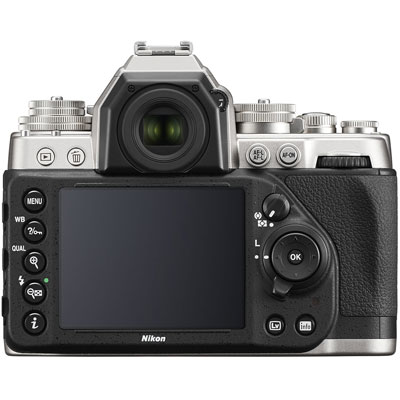
So the Nikon DF the ‘Retro’ Nikon, harking back to the days of the great Nikon FM, FA, and of course the F3. Well theres the good the bad and the ugly.
First the Good. Its based on a Nikon D600 with a D4 sensor that for users who currently have a D700 makes it a great upgrade path. While it will not keep up with a D4, with that sensor it will have great quality and fit with people who thought the D800 is over kill. I love the analogue controls on the top and while a bit chunky it does not look to bad.
The bad, well thats the price, for basically a D600 and focusing package with the D4 sensor its way over priced. I would also like to know if the mount is attached to the back via the metal chassis, in the D600 it is not which means people like me with big long heavy lens risk warping the mount reference to the back. The D800 and D4 has no such issue.
And the Ugly, well as much as I like analogue controls, when Nikon moved to the G range of lens they lost the aperture ring so there is an odd aperture control on the front and from the back its still looks like any other digital SLR. I know its tough getting away from the large LCD and digital controls but Epson got it right when they embarrassed Leica by producing the worlds first digital Rangefinder with the RD-1 with the reversible back.
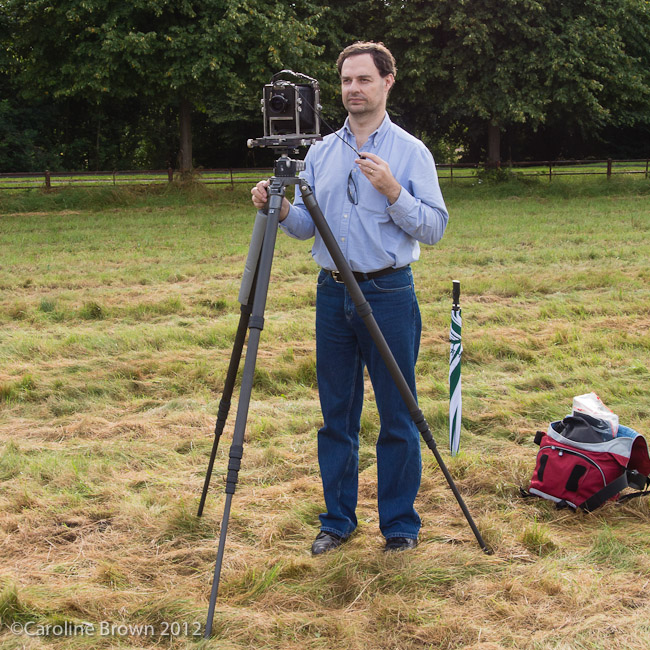
I have to admit I like it, but at £1000 over the cost of a D600, sorry I would rather buy the D800 and spend money upgrading my computers to cope with the 36 MP files. Money better spent I think. For now I will scratch my Retro itch by using my Leica M4, M8, Hasselblad V and Ebony. Now the Ebony, thats Retro!