A quick sensor cleaning tip

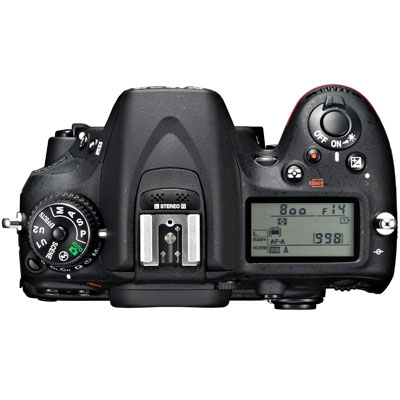
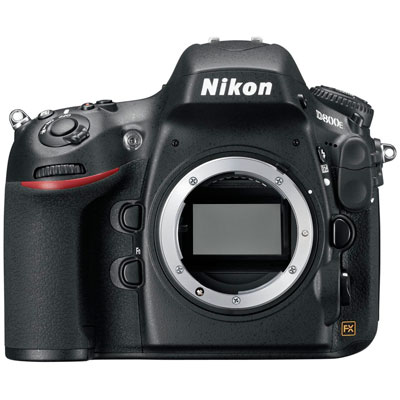
I was asked today about sensor cleaning, after a friend of mine spotted some spots on his landscape shots.

Its generally landscapes that spots become visible.  I’ll have to blog about sensor cleaning in more detail when I have the time but here are a quick few tips.

How to test for sensor dust?  Well set your camera to aperture priority, and set a aperture of about f/8 or greater, the more the better, f/22 or f/32 if your lens can stop down that much.  Then at your base ISO or at least not too high, take a photography of a plain even toned subject.  A bright blue sky is ideal.  Then examine the result in some detail on your computer.  The spots should be fairly obvious.

To do the easiest clean then I recommend a good blower such as a Giotto Rocket.  With the camera switched off and the lens removed, turn the camera upside down and give the sensor a good blow with the blower.  Don’t use canned air, and most certainly do not try blowing with your mouth.

Ilford B&W Disposable Cameras – XP2 and HP5

There seems to be a growing interest in Black & White recently, and as part of this tread Ilford have now released some Black & White Disposal Cameras, so if you want to give Black & White a try you can, even if you do not have a film camera.

You have the choice of sending the camera to Ilford or getting it processed yourself or even have a go at processing the Black & White yourself.

Internet Camera Reviews

Its interesting how the negatives or in some cases positives can become amplified and grow on the internet.

The Nikon Series One was dismissed by most before anyone could review it.  Too small a sensor, not worth considering.  I also dismissed it but on trying it was actually very impressed.  Image Quality is not up to DSLR standard but its better then most compacts and I decided to make one my compact camera.

The Fuji Range of X series cameras have garnered a fan base of people who like there traditional use of a optical viewfinder, traditional shutter speed dial and aperture dial.  The X100 was a great little camera but its focus was hit and miss. Other X series cameras came such as the Fuji X Pro1 and many dismissed them because of there focus capability.

I really liked the concept of the X series, with its hybrid optical viewfinder and I remember reading an essay from Michael Riechmann about how he felt the Leica M should develop.  Many feel that the Fuji X series is what the Leica M should become.

The Fuji is considered my many to be a poor mans Leica, but Fuji Glass is up there with the very best.  The current Hasselblad Medium Format Glass is rebadged Fuji and they still make some of the best Large Format Glass available.

One should never judge a camera until one has tried it ones self.  I really wanted like the X100 but found with my big hands, the aperture dial was a little difficult to use.

Well today in the office I managed to get my hands on and try the Fuji X Pro 1.  The focus for a mirrorless camera is fine, but this was running the latest firmware.

Its one thing to admire Fuji for.  Since the release of the X100 they have continued to support it and release new firmware improving it and overcoming its shortcomings.  So while a camera may have limitations they have continued to listen and improve on it.

Most will say the Sony NEX-7 is a better camera and while this is true, the Fuji currently has better glass.  Its the great strength of Leica that their glass is hard to beat, many will put up with lack of weather sealing, slow performance and manual focus on a Leica M, for the ability to use the hard to beat Leica glass.

Of the current mirror-less options, ignoring the Leica M range, the Fuji has the best optics money can buy; and being autofocus its considered a better option for most people.

After briefly testing the Fuji today I have to admit there is nothing to worry about with the focus.  My only concern is the ability of none Fuji software to process the RAW files.  See the CromasSoft website for more details.

For those worried about manual focus, it should be noted that up to today I have only produced one out of focus Leica picture.

Whitby in Winter – Day Three

Post date Blog Post Day 3 Monday 3rd December.

Today we were off for a walk, not a long one, just a five mile loop from the edge of Whitby, across the fields heading North.

Its actually a few miles to walk before you get to the start on the outskirts of Whitby, but then its through a farmers yard and across the fields.  After a while you cut through another farmers yard (watch out for the sheep dog, he will want to lick you to death), and then down to the coast where you come to the old Whitby Lighthouse and Whitby Fog Horn.

From here you are on the Cleveland Way.

On the camera front I was travelling light.  After yesterday’s excesses carrying the Large Format Ebony, lens and a Nikon V1 as well, my back needed a rest.  So I just packed the Leica M8 and a Summicron 35mm f/2 lens.

Very different to the last time we undertook this walk it was 2009 and I carried a Nikon D200 DSLR and a wide angle zoom plus a telephoto zoom.

Having a 12-24mm and 70-200mm zooms give you a lot of flexibility, but its tiring to carry just as the Ebony Large Format Camera is.

Carrying the small Leica or the Nikon V1 is a breath of fresh air and the reason why mirror-less cameras are getting so popular.

With any camera system it is about shooting to it’s and your strengths, there is something strangely liberating about going out with just a single camera and lens.  While it did mean I missed shots, the wildlife on the cliffs for one (Nikon D3s and 400mm f/2.8 anyone?) I feel I got some good images from the walk.

Whitby in Winter – Day Two Part A

Post date Blog Post Day 2 Sunday 2nd December.

The plan for today was a trip to the harbour and the Abbey, I had three shots in my head for the Harbour, but knew that I would likely be only able to get the one.  After that we would be heading up to the Abbey, I had three shots in mind here but it was likely I would only be able to get two of the shots.

We were stopping at Hillcrest Bed & Breakfast, and over a breakfast of Whitby Smoked Kippers I checked the iPad to confirm the tide times and also using ‘The Photographer’s Ephemeris’, checked the sun position. Unfortunately it looked like unless i could be in two places at once I would have to give up on one of the shots. To get the Sun and tide in the right spot for one of the harbour shots I would not be able to get across the harbour and up to the Abbey to get another shot I wanted.

Still we would try and get at least a couple of shots.

As a bit of an experiment I had borrowed Caroline’s Crumpler Bag and packed the Ebony Camera, two lens and some dark slides. It’s a lot smaller bag then the ruck sack i usually keep it in. I also had the Nikon V1 with me.  While the kit all fitted in the bag, the weight could be telling.

First off we walked into town and across to the other side of the harbour using the swing bridge.  Once down onto the beach to the area where I thought the first shot was, I was unsupprised to see that the sun was unable at this time of year to rise to the point where it would illumiate the main focus of my photograph.  So it was 0/1 for the first attempts.

In fact it you could say it was 0 for 2 as there was another shot I wanted but it meant being on the other side of the harbour and it just would not have been possible to get across and capture both shots before the sun had moved.

Next I climbed onto the Harbour wall to shoot the stone seabed.  There are some interesting features visible at low tide that I wanted to capture.

As you can see in the quick snap I took with the Nikon V1, the sun was not high enough to illuminate what I wanted to photograph.  I will just have to go back in the Spring.

It was now time to head up and take a shot of the harbour from part way up the cliff face. The ramp up was somewhat icy and it made the climb up a little tricky, but we managed.

I’ll blog about the next shot which I took with the Ebony 45S later once I have the film developed in Day 2 part B.

Finally it was time to shoot the Abbey.  There was two shots I had in mind, but it was unlikely I would get the first one as by the time we got up there the sun would have moved round too far, but we should get the second, which I did.  Again I’ll blog about that shot later.

Once the Abbey shot was in the can, we headed back down for a Spicy Mocha Latte and a toasted chibatta.

Then a last walk round the shops and back to the Bed & Breakfast for a rest.  My back was by this time killing me.  The Crumpler bag while fine for a short while was not good for a full day of carrying the large format kit.  Still now I know.

Overall a pleasing day.

Whitby in Winter – Day One

Post date Blog Post Day 1 Saturday 1st December

With a couple of days free in both our calendars, we decided a quick trip up North to one of our favourite holiday spots, Whitby.

We decided to go by car as there was a risk of Snow over the North Yorkshire Moors, so that gave me free rein over what camera equipment to take.

The day before we set off I fired up two useful iOS apps, one to predict tide times, as two of the shots I had in mind needed low tide; the other app shows where the sun and moon will be as we’ll as there height.  Things looked promising so I decided to pack the following.

  • Large Format Ebony 5 x 4
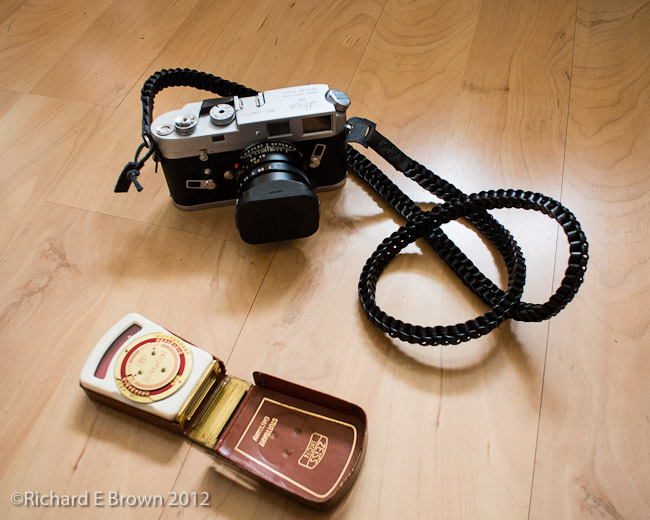
  • Small Format Leica M4 & M8
  • Micro Format Nikon Series One V1

We had a gentle start, not rushing, just taking our time heading North.  As the toll had been reduced and because of flooding around York we took the Humber Bridge over the river Humber and then headed over the Yorkshire Wolds to Scarborough.

The purpose of stopping at Scarborough was to visit a fabric shop so that Caroline could buy some silk for a project she has been working on for the last year.  Hopefully in the next few months i’ll be able to post some pictures.  It’s been quite an impressive project with lots of research and even the odd course to learn new skills.

Caroline managed to get the fabric she wanted and we then had a leisurely lunch in Scarborough. It was then time to head further north over the North York Moors.

It was here the weather took a wintery turn with snow and a cold wind. It was a little worrying as the snow started to settle on the roads but as we reached Whitby it started to clear.

We soon found the Bed & Breakfast and settled in. A walk into town followed and a fish supper all washed down with a couple of pint of fine Yorkshire Ale.

No Photography yet but a fine start to the trip.

Low Sun and thoughts of Winter Landscapes

After the intense rain of the last couple of weeks, it been lovely to be greeted with bright blue skies the last few days.  With the low sun its been a difficult commute into work but with the improvement in the weather my thoughts have been on winter landscapes.

So with that in mind the mapping applications have been coming out and I have been looking at where the sun will be and where the tide will be over this weekend, as I feel a large format trip over to Whitby is in order.

If we pop up on the bike i’ll just be taking the Leica M4, M8 or Nikon V1, but if we go by car then it will be with my biggest heaviest tripod and the Ebony Large Format Camera.

If your interested in Apps for photography have a look at ‘The Photographer’s Ephemeris’ not a cheap app but very useful for looking at where the sun and moon will be at a particular location on a particular day, better on the iPad then on the iPhone.

Rainy Days

Its certainly been wet here in Lincolnshire.  We have been lucky apart from a few flooded roads we seem to have gotten away lightly compared to some areas.

Its situations like this where having a camera with you can be a good idea.  Unfortunately not all cameras are weather sealed and some are more prone to failure then other.

So if your out photographing this week in this bad weather, take care of your gear.

Lee Filters – Something a little smaller Sir

While circular screw on filters are convenient, square filters such as the well known Cokin System are necessary, for things such as graduated filters.

As you camera system gets larger its not long before you realise you have spent a couple of hundred pounds on filters for each lens size.  Its at this point you start looking at filter systems.  While the Cokin system is possibly the most well know, I decided to invest into the 100mm Lee Filter system.  Now I have a single set of grad’s and a polariser to fit all my lens and cameras, with the aid of just a few adapter rings.  These filters can now be used on my Large Format Lens’ my Hasselblad Lens and my DSLR Lens.

Of course everyone now wants small and more compact high performance cameras such as the Sony NEX, Olympus and Panasonic MicroFourThird’s systems.

So with that in mind, Lee have produced a very high quality smaller filter system the RF-75.

Chris Bennett recently purchased this filter system so with Chris’s kind permission I borrowed it this weekend to give it a try.

The weather this weekend was not conductive to good photography, plenty of rain and hardly any blue sky in sight, but there was a brief spell of sunnier weather Sunday afternoon for a couple of hours.  So with that small windows of opportunity, I put the laptop down and left my Adobe Lightroom alone to try and test out the filter kit.

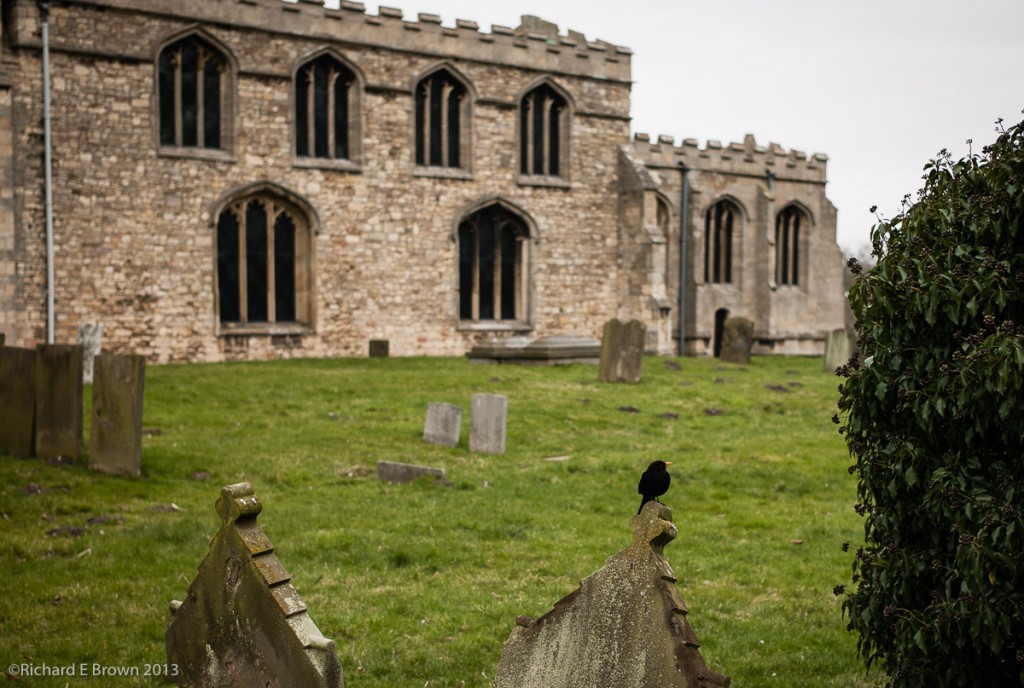
I headed out to the local church and first took a quick snap with a naked Leica 35mm f/2 Summicron lens.  The above shot is pretty much straight from camera with nothing done to it.

It was now time to test the filter system.  While Chris has a number of adapter rings suitable for his Sony NEX System lens, only one of them is compatible with a lens I had; the Leica 24mm f/3.8 Elmar.  A quick lens change from the 35mm to the 24mm lens and I was ready to test.

The adapter ring screws onto the filter thread of your lens and then the lens holder clips on that.  There is a knack to getting the holder on, but once on its securely held.  I decided to try the polariser to enhance the blue sky.  If your a Sony NEX or MicroFourThird’s system user you will have a advantage over me at this point, as I was testing this on my Leica M8 rangefinder so could not tell through the viewfinder what effect the filter was having.  I took two shots with the filter in different orientations just to make sure.

I found the filter system very well made and any difficulty in its use was more down to my choice of camera rather then the camera system.  I would say its a definite improvement over there 100mm system and well worth looking into if your lens do not need the large 100mm filters.  Of course if your lucky enough to have the Nikon 14-24mm f/2.8 even the 100mm filters are not large enough!  But Lee even have a solution to that.

Many would say filters are no longer required in todays digital world, and while a lot can be done in Adobe Photoshop and simular products, somethings its just easier and faster to get it right in camera at the point of  image capture.

Thanks Chris for letting me test this out, and if your luckily enough to have an investment in a small camera system then I suggest you take a look at this system.