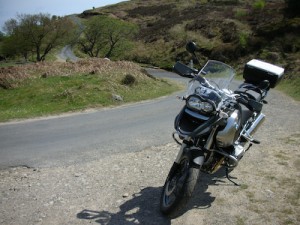
Spotted this on MCN recently, some interesting Points:
www.motorcyclenews.com
You are blind
That’s the bad news. For small but significant periods of time you are completely incapable of seeing anything at all. Most of the time this is not a problem. But it’s a big problem if another vehicle is about to occupy the same point in space as you.
The good news is that understanding why we sometimes do not see things allows us to adopt defensive strategies that tip the odds in our favour.
Peripheral vision sucks
Only a small part of the retina, in the centre and called the fovea, can see detail. The rest of the retina contributes peripheral vision but cannot resolve detail. Just 20 degrees away from your sightline your visual acuity is reduced by 80%.
To test this, stand 10 metres from a car, look one car’s width to the side and try to read the number plate. Try again from 5m. Technically, you are blind to detail in your peripheral vision. But it is very good at detecting movement.
Focus
Unfortunately, if you are going to collide with another moving object, and you are both travelling on a straight path, there is no apparent movement to the occupant of either vehicle. That is, to each the other will remain in exactly the same position until impact.
There is no relative movement – so our peripheral vision is not suited to detecting it. To have a good chance of seeing an object on a collision course, we need to move our eyes, and probably head, to bring it into the centre of our vision.
You cannot scan
Our eyes are incapable of moving smoothly across a scene and seeing everything. They move in a series of fast jumps, called saccades, with very short pauses, and it is only during the pauses that an image is processed.
Our brains fill the gaps with peripheral vision and assumption. Test this by looking repeatedly from your right to left eye in a mirror. You will not be able to see your eyes moving. Now have a friend do the same. You will see their eyes moving quite markedly.
This is because your brain actually blocks images received within a saccade. Experiments have shown that it is impossible to see even a flash of light. I am convinced this is the phenomenon behind drivers pulling out on motorcyclists at junctions. If a driver at a junction isn’t looking directly at you… worry!
Slow down
By changing your speed as you approach a junction, even when the road seems clear, you can help to create relative movement between you and another vehicle approaching the same junction at a constant speed.
If a driver has failed to see you directly, he’s then more likely to spot you in his peripheral vision.
Beware windscreen pillars
Research has shown that we tend not to look near to the edges of a framed scene. In a car the frame is the windscreen. So not only do the pillars represent a physical blind spot, but the driver will also tend not to fixate near to them, leading to an even bigger jump, or saccade, around them.
This is called windscreen zoning. Remember this when a windscreen pillar is between you and a driver’s face.
Assume something is there
Just when you thought it couldn’t get any worse, your brain is also less likely to register something you are not expecting to see.
Here we’re entering a scary territory referred to as ‘aviation psychology’. Suffice to say that if you think the road is empty, you are less likely to see a vehicle actually present.
Look methodically
When you look left and right at a junction, always deliberately focus on at least three different spots along the road in each direction – close, middle-distance and far.
With practice, this can still be accomplished quickly, and each pause is only for a fraction of a second. It means you are overriding the natural limitations of the eye and brain. Fighter pilots call this a ‘lookout scan’ and it is vital to their survival.
Look twice
Always look right and left at least twice. If you repeat the same lookout scan, which you will with practice, any vehicle masked by a saccade on the first look is less likely to be missed on the second.
This does not apply if you charge into a junction at a constant speed. Then a vehicle on a collision course will stay in the same relative position in your vision – if you miss it the first time, you will probably miss it the second time too.
Think: where is
the sun?
It’s generally understood that low sun can make it difficult to see, but not why: driving into sun reduces contrast, especially when vehicles with a small profile fall into the shadow of larger objects. Even large vehicles, but especially smaller ones like motorbikes, can become hidden.

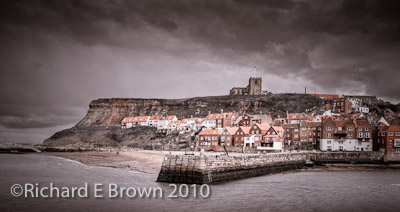 Whitby is one of our top three holiday destinations in England. When we visited a few months ago there had been a landslip, resulting in some houses having to be demolished.
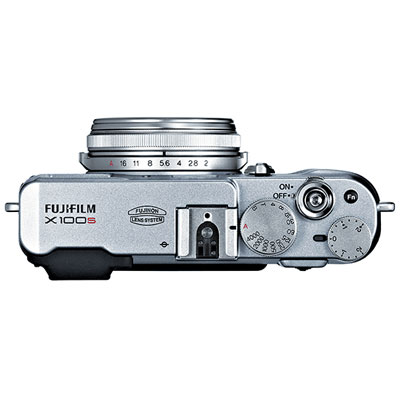 As expected Nikon announced more cameras in the Nikon 1 system and Fuji announced the replacement to the X100 and the X10 with the X100s and X20.
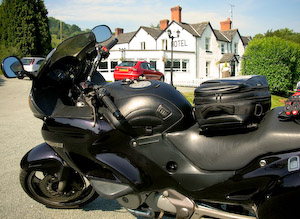
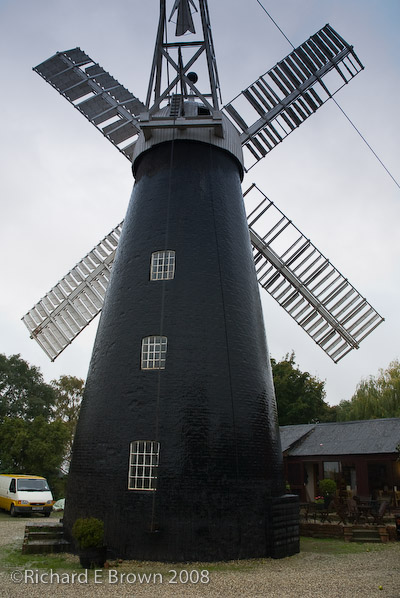 Saturday morning found me running low on supplies, I was low on strong flour for bread making, so with the weather being cold but fine, it was a great excuse for a ride out on the motorcycle.
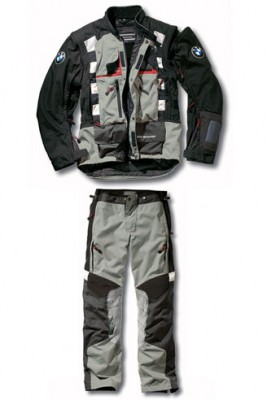 With the full BMW Rallye 2 suit with all its liners in, that would keep me nice and cosy. I added silk under gloves under my waterproof gloves which together with my heated grips on the bike would keep my hands warm.