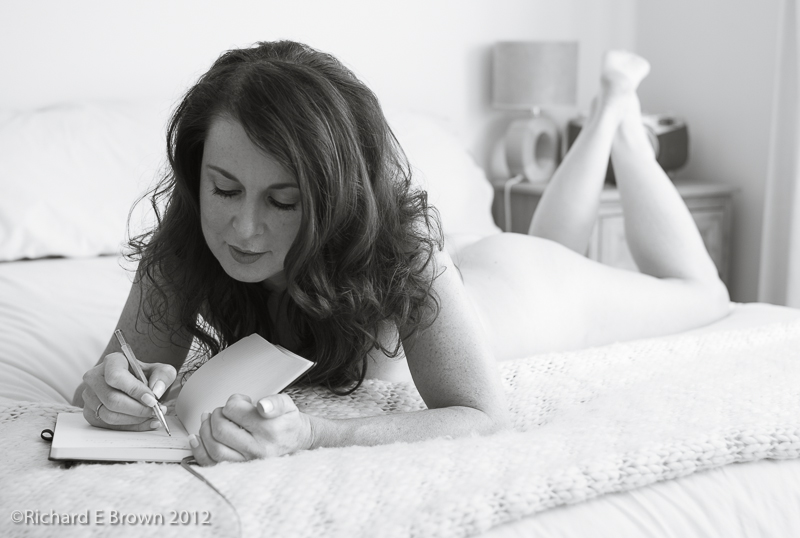
Leica M8
Leica 35mm f/2 Summicron
35mm, 1/60 Sec at f/3.4, ISO160
Post Processed in Adobe Lightroom V4.3
On a Mac MacBook Pro, OS-X 10.8.2

Family, Photography and other misc news
Leica M8
Leica 35mm f/2 Summicron
35mm, 1/60 Sec at f/3.4, ISO160
Post Processed in Adobe Lightroom V4.3
On a Mac MacBook Pro, OS-X 10.8.2
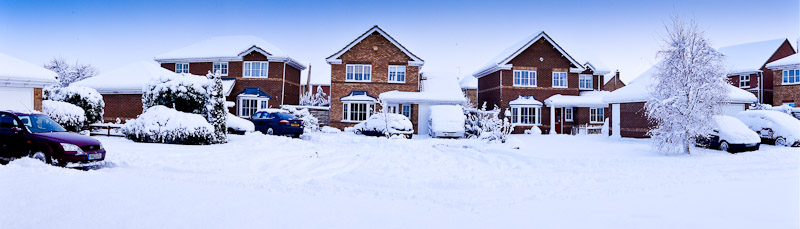
With our modern cameras and there multi pattern metering, we expect our photographs to be correctly exposed, even if there a little over exposed, the head room available in RAW files due to the nature of the Bayer filter means we can get a lot of information back. Underexposure then we just brighten the image.
The problem with under exposure is noise, as we brighten ie amplify the signal, we also amplify the noise, even at base iso’s this can be noticable.
Its always a good idea when shooting winter snow scenes with lots of white in them that can fool a meter into over exposure, to check the histogram and if necessary give an extra stop or two of exposure.
January is the annual CES show, and rumour has it that Nikon will be announcing some more glass and bodies for the Nikon Series 1 range.
A few fast primes would be nice and there looks to be another body on the way, a replacement for the J2, to be called the J3, and a new body called the S1.
It will be interesting to see what they have in store. As a compact replacement there great little cameras but definitely second cameras and not a primary camera.
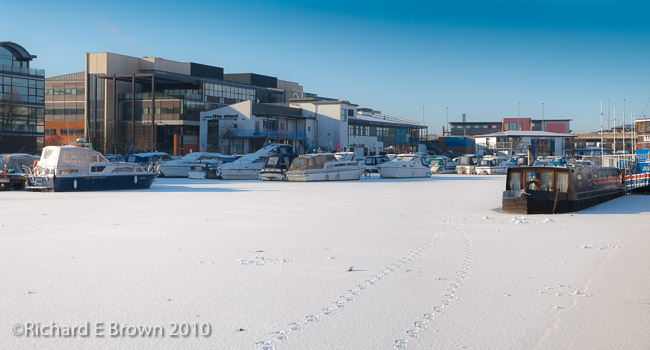
Winter; especially December and January is a period of celebration for many regions, so Happy “-insert you region’s ceremony here-“. If your not religious then enjoy your day off, unless your having to work to keep the rest of us safe.
Bodhi Day
December 8th – On Bodhi day some Buddhists celebrate Gautama’s attainment of enlightenment under the Bodhi tree at Bodhgaya, India.
Hanukkah
December 9th – Hanukkah is the Festival of Lights and marks the restoration of the temple by the Maccabees in 164 BCE. Hanukkah is celebrated at roughly the same time as Christmas, but there is no connection at all between the festivals.
Yule
December 21st – Yule is the time of the winter solstice, when the sun child is reborn, an image of the return of all new life born through the love of the Gods. Within the Northern Tradition Yule is regarded as the New Year.
Christmas
December 25th – The day when Western Christians celebrate the birth of Jesus Christ.
Oshogatsu
January 1st – Shinto New Year, one of the most popular occasions for shrine visits.
Guru Gobind Singh
January 5th – Guru Gobind Singh (1666-1708) was the tenth and last of the Sikh Gurus. He instituted the Five Ks and established the Order of the Khalsa.
Orthodox Christmas
January 7th – Most Orthodox churches use the Julian rather than the Gregorian version of the Western calendar. As a result, they celebrate Christmas 13 days later than other Christian churches.
Makar Sankranti
January 14th – Makar Sankranti is one of the most important festivals of the Hindu calendar and celebrates the sun’s journey into the northern hemisphere.
On the Biking Blog “Ride it like you stole it!” which is sadly no more by Dave Dragon, there was a poem “The Biker’s Night Before Christmas”.
I have posted this before but as it is Christmas Eve I thought I was worth posting again.
Twas the night before Christmas, and all through the pad,
There was nada happenin’, now that’s pretty bad.
The woodstove was hung up in that stocking routine,
In hopes that the Fat Boy would soon make the scene.
With our stomachs packed with tacos and beer,
My girl and I crashed on the couch for some cheer.
When out in the yard there arose such a racket,
I ran for the door and pulled on my jacket.
I saw a large bro’ on a ’56 Pan
Wearin’ black leathers, a cap, and boots (cool biker, man).
He hauled up the bars on that bikeful of sacks,
And that Pan hit the roof like it was running on tracks.
I couldn’t help gawking, the old guy had class.
But I had to go in — I was freezing my ass.
Down through the stovepipe he fell with a crash,
And out of the stove he came dragging his stash.
With a smile and some glee he passed out the loot,
A new jacket for her and some parts for my scoot.
He patted her fanny and shook my right hand,
Spun on his heel and up the stovepipe he ran.
From up on the roof came a great deal of thunder,
As that massive V-twin ripped the silence asunder.
With beard in the wind, he roared off in the night,
Shouting, “Have a cool Yule, and to all a good ride!”
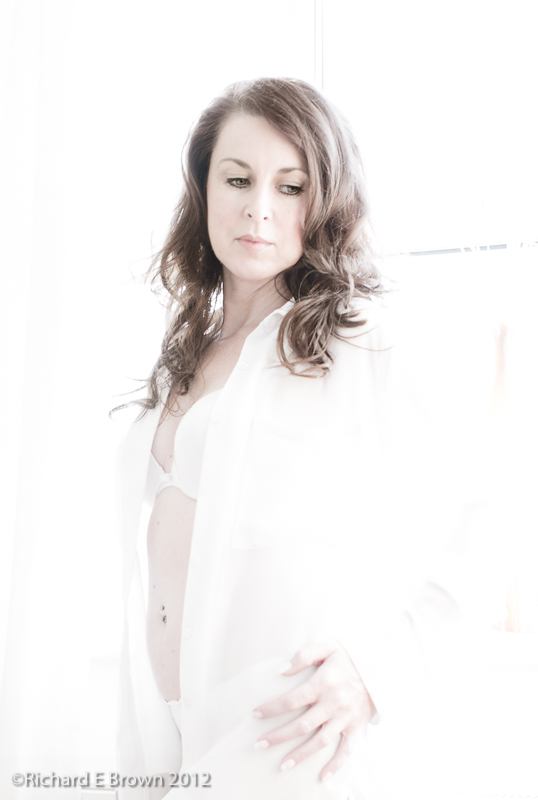 During a test shoot earlier in the month, after changing the lighting and taking meter readings, I then forgot to change the settings on the camera. Luckily when shooting digital I always check the shot and the histogram after the first shot after lighting, set or positional change on the back of the camera.
So the above shot is over exposed but the rest were correct. This over exposed shot would normally be rejected, but with the help of the recovery slider in Adobe Lightroom and some adjustment of the back point, it has made a nice and striking high key photograph.
Its always a good idea once you have the photographs you need, to then go on and experiment a little, as in the above mistake, you might a nice shot hiding.
It was my Birthday recently and I asked for a few unusual presents.
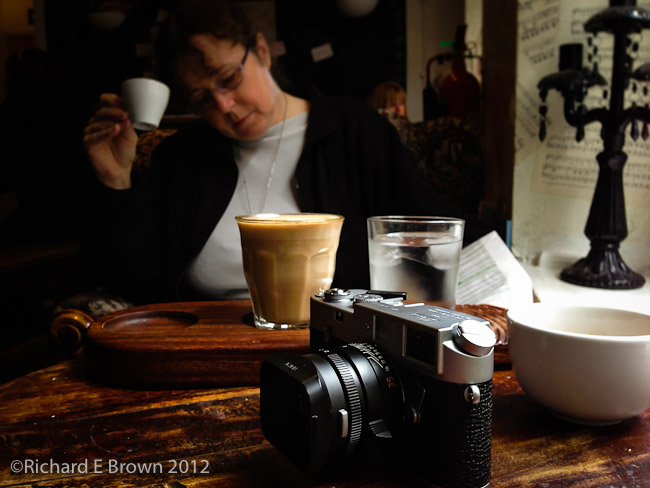
Now me and Chris have an interest in coffee as well as cameras and a few weeks ago Chris emailed me a link to a blog from a guy mad about Leica’s and Coffee; just like me.
The site was CoffeeGeek.
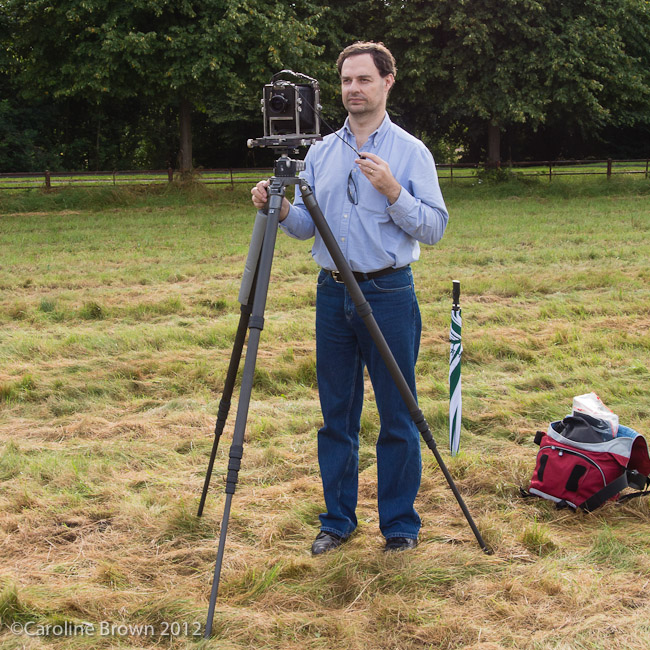
It was while reading this site I spotted an interesting post about shaving. As you may be able to tell in the photograph above, I usually have a few days of stubble showing. Shaving has always irritated my neck and whether I use one of the latest multiblade cartridge shavers or an electric razor, I still get a sore neck.
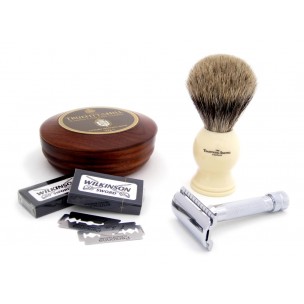
The post linked to a few shaving forums, and these guys are real shaving geeks. Very knowledgable and trying to put a bit of fun and ritual back into what most consider a chore.
So after a bit of reading up and learning how bad for your skin modern canned saving cream and multi-blade shavers are, I had family members buy me a new shaving kit.
It consisted of a Badger Hair Shaving Brush, a Merkur 34C DE Razor, Traditional Saving Soap, Bowl, Stand and a multipack of different blades ranging from Derby Blades from Turkey right up to Japanese Feathers, some of the most fearsome and sharp razor blades money can buy. While the products are a little more expensive then the standard, the soap is very concentrated and will last a long time. The blades can be found for as little as £11 for 100 blades which means after a year you are saving money.
Though its not the money saving I am interested in. It is whether this stops my sore neck and makes shaving a pleasure instead of a chore. If it succeeds then it will be one of the best birthday presents yet. If I get on well with the DE razor I might take up Caroline’s offer to buy me a straight (ie a cut throat) razor; maybe for my next birthday.
If you are interested in finding out more then you ever wanted to know about shaving, check out www.badgerandblade.com and sharpologist.com.
Oh and thanks for The Shaving Book Andrew, an interesting but also very funny read.
If your after a cheap (well thats relative), full frame 35mm DSLR then now may be the time to buy. When the Nikon D600 was announced it was close to the price of the D800 here in the UK, well now the price has fallen by about £500 in just a few months.
Looking at how the little V1 plummeted in price I for one am wary of buying a camera now until its been out for about twelve months. Not only does the price fall but any issues are found and resolved, such as the early focus issues on the left hand sensors for the Nikon D800 when it was announced.

Hybrid and electric cars have gained in popularity over the last few years. Whether the environmental manufacturing costs outweigh usage benefits is not an argument I feel I know enough about but petrol cars will one day be a thing of the past.
The big problem with electrical vehicles is weight and current battery technology.
Well now bikers now have the option of an electric motorcycle with the new range of Zero Motorcycles.
The big problem I have with Electric Vehicles is how quiet they are. Current petrol motorcycles if fitted with legal exhausts are very quiet and more then once a pedestrian has stepped out in front of me, having not looked and not heard me. With electric vehicles getting more common its going to be a growing problem.
15th April 2012 – Post dated blog entry
This is going to one of many post dated blog entries generally about film photography. One of the delights and difficulties about shooting film is the time between taking the image to actually viewing the image. This can be a benefit and also a negative.
Today I set out to visit Hartsholme Park in Lincoln. It is a location I visit often in the spring, as it is a great location to get some really good bird shots.
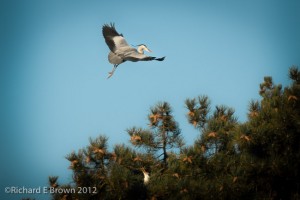
Today though, it was not wildlife I was after but two landscape shots.
When I arrived the sky was a little too blue and lacking in some cloud but I had hopes that at least one of my two ideas would work.
I parked up and as I walked over to the lake I was surprised to lots of old Austin 7 cars arriving. I would definitely have to check them out later but for now I needed to get setup to make the most of the low sun.
Today I was shooting film on large format and small format, with digital being handled by my trusty Nikon V1.
I arrived by the lake and started to search out the position I had spotted on a previous visit. I soon found the spot I wanted but was disappointed to find that there was someone in the water marking out a model motorboat course. With the foreground I wanted those nice bright yellow markers floating in the lake would be right in the middle of my picture. Time for a re-think. A slight move to the right would mean I would lose the foreground I wanted but would give a clear view of the main focal point.
Well it would still be a nice shot so I decided to go for it. I setup the tripod and got out my meter and started to measure the scene.
The shadow on the far bank looked to be about the darkest part of the scene so I took a spot meter reading. It measured at 9.6EV which I loaded into the meters memory, I then measured the highlight on the water which was 13.8EV, and the sky was 15.6, that was a six stop range, bit much for film, but I thought I could afford to let the shadows block up a little so I would risk a shot using the Large Format Ebony 5×4.
Setting up I shifted the camera back to move the focal point lower in the frame, as there was no foreground interest in this new position. I some close trees framing the shot on the bank but being so close there were out of focus. Time for the scheimpflug effect. The great thing about large format is the camera movements, its like having photoshop built into your camera.
Not thinking I used some front tilt to drop the lens board forward to allow me to shift the focal plane and give me more depth of field. I rechecked the focus and something was not quite right. I used a little more front tilt and checked again. Things seemed worse, thats weird I thought. I stopped and thought for a moment, what was going on. Then it hit me. Dropping the front with front tilt is used to bring the foreground into focus, but this shot was unusual, my foreground was the tree cover; I was tilting the wrong way!
I soon reset and started again, tilting the ‘wrong’ way this time to bring the overhead branches into more focus, time to grab the film.
I took a dark slide loaded with Fuji Provia 100 and put it in the back of the camera. Time to re-meter.
That gave me an average 13.2EV, a bit more manageable. I closed the lens and set a aperture of f/36 (thats f32 and a third) and a shutter speed of 1/8 second and took a shot.
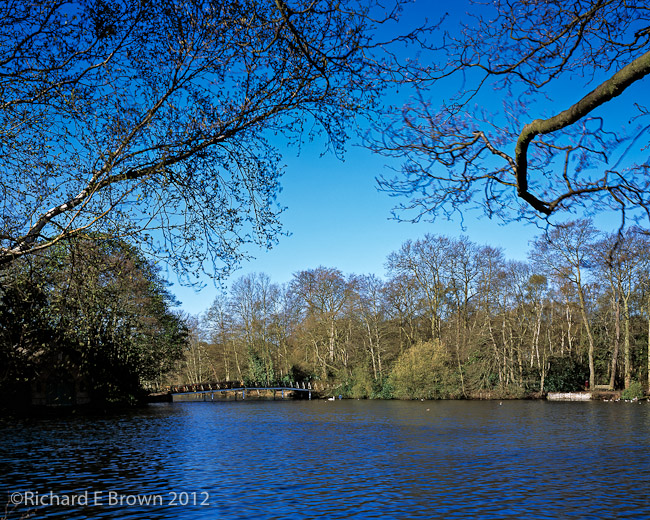
Time to pack up and move to the next location. This was a scenic view of the lake, I walked over but the light was not right and there was no cloud interest, it would have been a pretty shot but nothing spectacular.
Time for a walk.
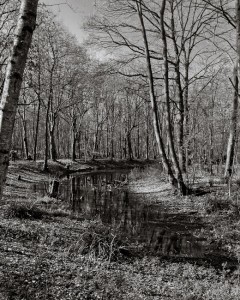
I had a bit of an explore and found a number of areas that could produce promising pictures. The shot above was a quick snapshot with the Nikon V1, certainly an area that needs more investigation.
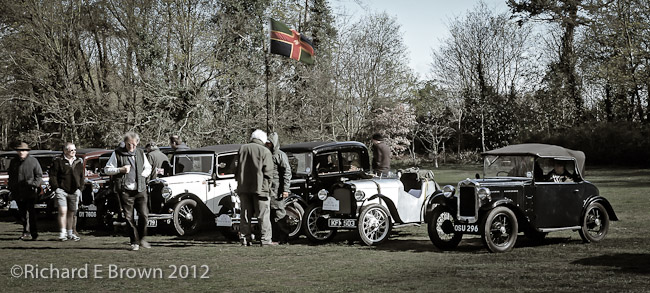
I then headed back to the cars, and took a quick snapshot of the cars.
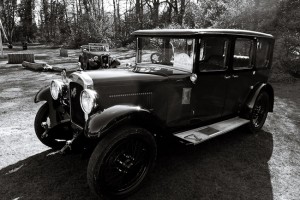
A good days photography, I did not get the shots I wanted but I certainly got some new ideas for more shots in the future.
I also tried a snap shot of the cars using the Ebony, a shot bound to end if failure you would think, well I like it even with the blur of the people.