iPad – Perfect Tool for travelling Photographers? Part2

Is the iPad a suitable tool for the travelling photographer, well in certain areas yes.

Now I will be the first to admit its not going to replace your computer, but as a portable device is does have many attractions to the photographer.

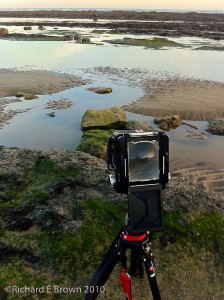
We all should know by now the importance of backup.  Your photographs are not safe until you have a second copy of them.  For a number of years now, many photographers have been carrying portable backup devices like the Epson pictured above.  These small dedicated devices have small hard drives in them and a card reader to quickly backup your cards.

I now use the iPad for this task, and while the storage is limited, you can review your images on the large screen and cut the chaff from the wheat so to speak.

For users of Adobe Lightroom, there is a product called PhotoSmith, once your photographs are safe on the iPad you can use this to add your metadata and key words. Once your back at your office you can sync with your computer and your photographs are where they belong and the boring task of adding metadata and key wording is already done.

So that covers backup and some of the more boring data management task but what about the creative function.

After Photosmith my next most used app is SnapSeed.  This is a great app from Nik software who make possibly one of the best Black & White Converters available.  If you after processing your RAW files and trying out different ideas then this is the ideal app.

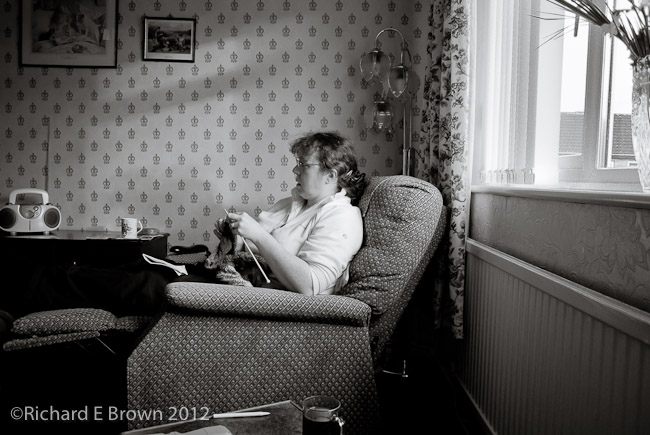
From simple Black & White conversions like this to more adventures and dramatic shots.

For studio users, Elinchrom have released their remote control application, I can now remotely adjust the power and settings of my Elinchrom flash heads direct from my iPad.

While I have not tried it myself there are now wireless tethering options.

With the release now of Photoshop Touch and iPhoto more and more advanced post processing techniques can be used.  Whilst you might not end up publishing shots produced on your iPad due to limitations on the size of files it can handle, it makes a great tool for when you feel inspired and want to try out ideas.

Lastly we have not mentioned portfolio displays.  The iPad makes a great way of showing off your photographs to potential clients.

Whilst they may be better ways of accomplishing many of these tasks, the iPad can do a very satisfactory job, and it is small, light and how many laptops have 10 hours of battery life.

If you feel only a real computer will do then take a look at Apple’s MacBook Air, the 11inch model is not much bigger and the i7 version with 250GB solid state hard disk and 4GB of RAM is far faster and more powerful then the spec would suggest.

New iPad – Perfect Tool for travelling Photographers? Part1

The title of this blog post is far more impressive then the actual content 😉 As I am sure most of you know, the new iPad was announced yesterday.

I’ll leave the details for others to write about, but later i’ll blog about some of the apps I use in iOS to make my Photographic life easier.

See Chris’s Blog for more details on the new iPad.

The big two announcements recently were of course Adobe Photoshop Touch and the New Apple iPhoto. It’s apps like this that are beginning to move the iPad from a passive viewing type device to a creative device.

Adobe Lightroom V4 released

Well after a relatively short beta period, Adobe Lightroom V4 has been released.

Lots of information and training is now becoming available so I would advise you to check out some of the free on line tutorials and if your going to purchase V4 and want to make the best of it, I can recommend either the video tutorials from either Kelby Training or The Luminous Landscape.

For more info on V4 check out lightroomkillertips.com and Chris’s Blog for more info and links.

For version 2 and 3 I upgraded immediately as there was functionality I really wanted to use straight away. Now I think I may wait. Last time when Adobe Photoshop CS5 was released they did a double upgrade offer that made the Lightroom upgrade a lot cheaper. Hopefully they will do the same this year.

Monitor Calibration and OS X Lion

Monitor calibration is critical for photographers.  There is no point in trying to do extensive post production on an image if you have no idea what your monitor is actually displaying.

To this end I use the X-Rite i-1 Display 2.  This is a version of their profiler that is no longer available.

When OS X Lion was released many people were surprised that their Profilers no longer worked.  Unfortunately the profiling software was written for Macs with PowerPC processors.  Until Lion, all Macs came with translation software that enabled them to run  software written for the older Macs.

Luckily X Rite have released a native Intel version for Modern Macs running OS X Lion and even for older versions like mine.  If you are a registered user you can login and download the new version.

Photoshop Touch

Well by now after the weekends leak and Mondays official announcement, Photoshop Touch for Tablets is finally out. One of the most hoped and wished for Applications for the iPad.

For people wanting to make a start on there images before they go to there office and power up there main computers it looks a good option.

For people like me who want to travel light, then with apps like this, PhotoSmith and Nik software’s SnapSeed, you can now go out on site for a few days, leave your laptop at home and just have your iPad tucked in your camera bag.

Here is a quick review from Terry White.

A temporary Change of Bike

Our BMW R1200GS had to go into the garage this week to have the rear suspension looked at, its had some very hard use over some very poor quality roads recently.

While it was there I had a loan bike.  Our local BMW Bike dealer is pretty good about loan bikes and over the years, while our bikes are being services we have tried out just about every bike BMW make.

Today I got to have a blast round Lincolnshire on the baby GS, the F650GS.  The old model from a few years a go was a real blast, but not a bike I could ride for long. It was a single cylinder 650cc bike, and that big single thumper while fun made your bum go numb after about 100 miles.

When the F800ST was released it brought to BMW a whole new engine, the parallel twin 800cc.  Parallel twins have a bad reputation, but this was a whole new design with a lot of cutting edge F1 technology incorporated into it; and it is a bit of a Jekyll and Hyde engine.  At low rev’s a comfortable bike with amazing fuel consumption, but at high rev’s a real sporty and fun bike when the mood took you.

Versions of this engine have now been used across the range and confusingly now powers the F650GS, yep the 650 is actually an 800cc bike.  The GS range now has the F650, F800, and R1200GS.

The F650 is the soft option. A fun bike easy to ride and not too threatening.  The F800GS is a different beast, far more aggressive and a real off road tool.

The R1200GS needs no introduction.  I have to say my R1200GS is the best motorcycle I have ever owned and is even the best bike I have ever ridden.  There are other bikes that I would rate as just as good but different, but the R1200GS is unique.

Crossing the Ford

Blurred Birds

First an apology, the idea behind this photo is a blatant rip off from one Chris Bennet took last year.

Often when out at a lake or river, people come along and start to feed the birds, the ensuring flock of birds wheeling around can be a great opportunity.

When you get home and review your shots you generally find a lot of blurred unsuitable photographs, but sometimes within that blurred set is something that does look interesting.

In the shot above it has a lot to recommend it.  It was a shame that the main bird was not central and I just cut off its feet.  I have added more blur in post production and some vignetting to draw the eye to the centre.  Overall a nearly shot.

February’s Visit to Hartsholme – Bird Photography

This weekend I made one of my occasional visits to Hartsholme Park.

The weather indicated that Sunday would be best, so on a bright but cold Sunday morning I headed off with my big Gizo tripod and an SLR with my longest/fastest lens.  In this case a Nikon D200 and a 70-200mm f/2.8 with a TC14 teleconverter attached.  This gave me a reach of up to 420mm.

Wildlife and Sports are two of the hardest photographic skills to master.  Subjects often far away and fast moving.  Its less how good your camera is but more how familiar you are with your subject and your camera.

I tend to customise my camera somewhat.  I turn off the focus activation from the shutter button and have it set to the AF button of the back.  I also reduce the number of active focus sensors available to the camera so that it will not get to confused and can concentrate its resources to a few key sensors.