Austin 7 – 90th Birthday

Austin 7

On Sunday I had a trip to Hartsholme Park, the main reason was a couple of Landscape shots I wanted to get (report to come once I have developed the film)!

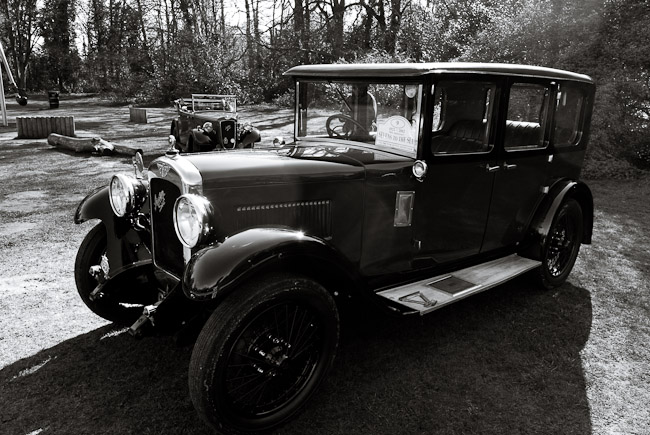
When I arrive I was surprised to see lots of Austin 7’s arriving.  After I took my landscape shots I headed over to the cars to take a few shots.

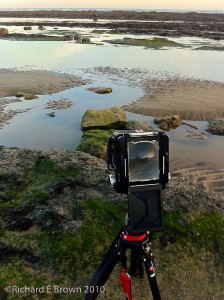
I took one on my Ebony 5×4 Large Format Camera, possibly not the best choice! Also a few with my old trust Nikon FM2 which had some Black & White film loaded.  I also took the shot above with my trust Nikon V1, shot in RAW and then processed in Lightroom V3 and converted to Black & White.  I really seem to be in a Black & White mood at the moment.

It turned out they were all having a drive out and meet up to celebrate the Austin 7’s 90th Birthday.  A lovely old car and very photogenic.

Film Processing – a New Semi Automatic Home Unit

For film users it’s been a lean few years on the film and print developing front. High street shops that develop and print film are becoming few and far between, and those that still exist only process 35mm print film.

Nikon V1

A few specialist mail order companies still offer E6, and Black & White for 35mm, Medium Format and Large Format, but these are cutting there services. The local one I use has just stopped processing Black & White for Large Format 10 x 8.

I like many old film users have the equipment for manual processing of 35mm Black & White film, but I do not have the means for Colour or Medium and Large Format.

It’s been over twenty years since a new home processing unit was release and in 2010 the last unit available was discontinued.

I would like to shoot more Black & White film for Medium and Large Format but good quality processing is getting harder and harder to find, so in the last two weeks I have been researching my options.

Manual processing is still an option and you can still pick up Patterson, Jobo processing tanks as well as solutions like BTZS but I would prefer a temperature controlled semi automatic system that can handle colour too.

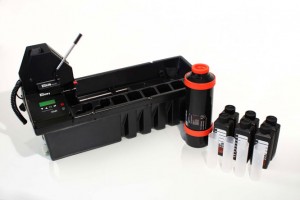
There have been rumours recently that Jobo may be about to go into production with a new model this year.  The prices of old second hand units has been climbing in the last twelve months, and they now cost more then they did new.  Checking out their website, I looked up their UK distributed and dropped them an email. Their reply was prompt and promising; I was please to find out that Jobo are currently gauging interest and are looking at putting a new model into production this summer for an autumn release.  Its unlikely to be cheap but it should mean that secondhand prices should drop and new spares are also soon to be coming.

Jobo Semi Auto Film & Print Processor

Its interesting that Fuji has been releasing new films and new film medium format cameras yet companies like Kodak have been cutting back.  Let’s hope films revival continues and more film related products get released.

Practice Landscapes

I spent some of this bank holiday weekend planning a few future photo shoots, nothing definite yet but starting to get a few things lined up.

The Boat House

I definitely want to get a few large format landscape shots completed; mainly for the practice; ready for a big photo trip next month. As I have not owed a large format camera until recently, and have only hired, borrowed or gone on large format landscape courses I am terribly out of practice. Its going to be good shooting some film again, I have shot barely four frames of film this year and over 1700 digital.

I might even dig out my old Nikon FM2 possibly one of the greatest manual film SLR’s ever, and shoot a few rolls of Ilford HP5, now where did I put my old developing tank!

Loading my Darkslides

If you have had the pleasure of photographing with film, then you will know the pleasure of film loading.  With the modern film SLR of the 1990’s, then autoloading made the loading of small format 35mm film an easy task.  With older cameras it was a manual process but still relatively simple.  The 35mm film canister and the film sprockets took away the need for much skill, just some care was required, and it was rare to ruin a roll of film.

With the modern digital camera then very few people use 35mm film anymore but medium format and large format is still relatively popular, though medium format in professional use has mainly moved to digital with cheap digital backs now available for £10,000, cheap being a relative term!  Strange as it may seem, over the last few years film sales have been increasing.

For medium format and large format, loading film is a more challenging and old fashioned affair.

Hasselblad 503CW
Hasselblad 80mm f/2.8
1 Sec at f/22, ISO50
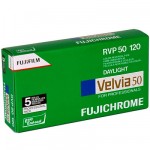
Fuji Velva RDP 50 120

If you need to know how to load a Hasselblad V System Film Back then check my old Blog Post that you can find here:

Having a free afternoon today I decided to load up a few large format dark slides with a film I wanted to test.  The film in question was Fuji’s Provia 100F.

Large format film has to be loaded into its holders in total darkness; I, like many old film users no longer have a darkroom, so I resort to an old changing bag, not ideal but it gets the job done.  The sheet film has a notch in the corner so you can tell which way to load it.  Held in a portrait orientation, the film emulsion is facing you when the notch is in the top right hand corner.

There is quite a cultural change when shooting large format film to digital.  On a days shoot with small format digital I can easily shoot 500 or more images.  When shooting medium format its likely to be no more then 6 or 7 images.  With large format that drops to 1 or 2.

With the amount of effort needed to get a single shot with large format you tend to be really sure you want that image before tripping that shutter.  Its a slower more contemplative form of photography.

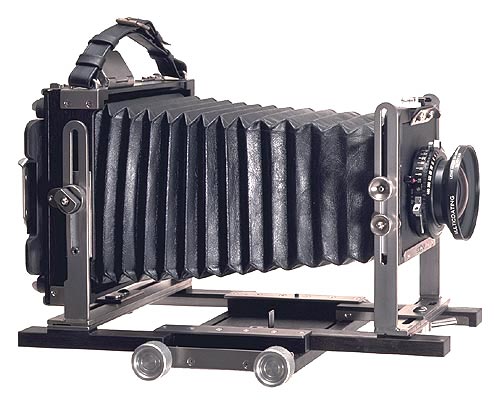
Large Format 4 x 5 Ebony 45S

In my continued search for the ultimate in image quality, I have finally managed to get hold of my own 4 inches by 5 inches Large Format Camera.

I have shot large format before and regularly shoot medium format, but until now all my large format shooting has been with hired large format cameras or on Large Format courses.

While to many the Ebony 45S looks like a hundred year old camera, it is a current state of the art Large Format Camera, capable of shooting Large Format Film, a Digital Scanning Back, a Medium Format Film or Digital Back or one can even mount a Nikon D800E to the back (something I hope to test later in the year).

This camera with its advanced movements, tilt, shift, swing, etc gives nothing away to image quality. The downside is speed of use and the size and weight.

I see my Nikon V1 being the perfect compliment when carrying this ultimate in image acquisition.

In keeping with my Nikon habit I have also got a Large Format Nikkor 150mm f/5.6 standard lens.

Its going to be a tough learning curve but one I am really looking forward to.

A Day at the Park

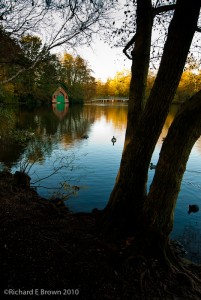
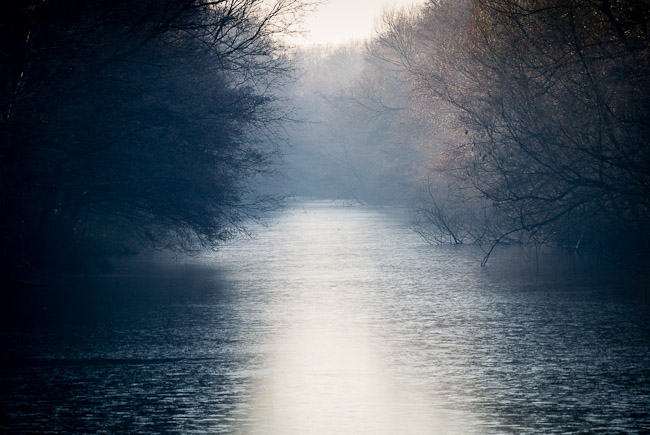
I made one of my regular visits the other day to Hartsholme Park.

One of the locations at the park is the subject to one of my projects for the year.

This particular Project involves me shooting on my trusty Hasselblad using a film back, but while wandering round the park I took a number of quick snaps with my new Nikon V1.

These shots above have all been processed in the new Adobe Lightroom V4 Beta.

When shooting with a big heavy Large Format or a Medium Format Camera it is handy to have a good all-purpose small light camera.  A big SLR is too heavy to carry along side a Medium or Large Format Camera, but my Nikon V1 I am finding is the perfect small camera to accompanying me, when I have my big high quality cameras with me.

My large cameras (with the exception of my SLR’s) are slow to use but produce extremely high quality images.  A good companion camera camera must be small fast and responsive.  In this way the Nikon V1 is a better camera then most other small cameras currently available.

Other small cameras may produce better quality images but few are faster and as responsive as the V1.

If I could  only carry one camera and it had to be small then I would go for image quality above all, and the Nikon V1 would not be my first choice, something along the lines of the Leica M9, Fuji X1 Pro, or the Sony Nex7 would be a better choice.

How do they handle on the performance front, well with the exception of the Leica, I don’t know, I have not spent enough time with them, at the moment my Nikon V1 is my carry everywhere camera that I am more then happy with.

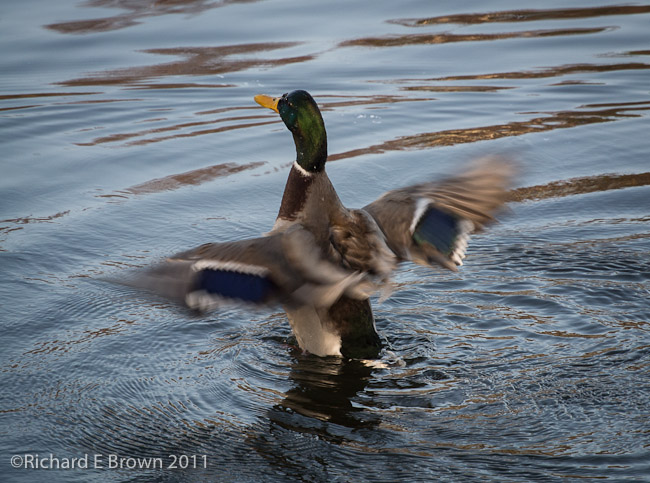
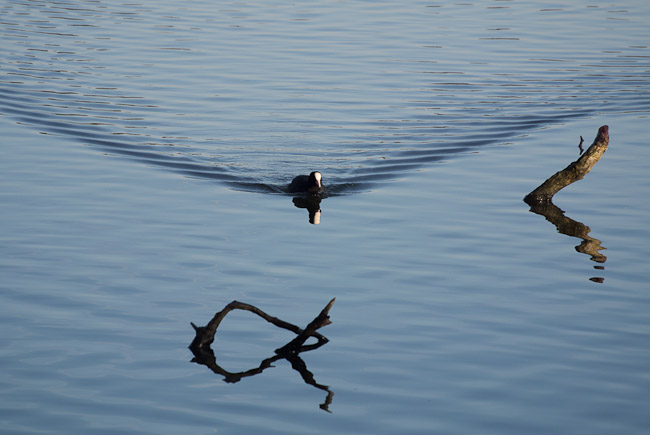
As a side note, it was the best visit I have made to the park for a long time.  Lots of wildlife, I saw the usual Pigeons, Black Headed Gulls, Canada Geese and Greylag Geese.  But much earlier then I expected there was also a Heron getting the nest ready, Coots, Tufted Ducks and Great Crested Grebes.

Also while framing a landscape shot a Grey Squirrel crept up behind me, I was very surprised to see him get so close.

Photographic Goals for 2012

Most of my Photographic goals for 2012 are the same as last year but there are a few oddities.

  1. Shoot 10 portfollio quality images over the year.
  2. Shoot my Red Beach Image thats in my head.
  3. Shoot my Dancer on Beach Image thats in my head.
  4. Shoot at least one picture a month on film.

November’s Photo of the Month – Film

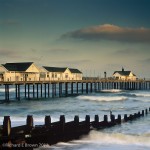
Last month’s Photo of the Month, is unusual in one respect, it was taken with film.

It was not the shot I was after, the conditions were not right, but I still thought it was worth a record shot.

This is a low quality scan of the original slide, but it gives you a basic idea of what the real image is like.
There are lots of arguments over what is better, film or digital, and many get caught up in the technology race and the race for more megapixels.

What people seem to forget is that for the majority of people, who have no intention of producing prints larger then A4, then 6mb is all you need.

The other point is that film and digital are not the same and are difficult to compare, they act differently at the extremes of light and dark. To a lesser degree it’s like arguing between Oil Paintings and Watercolour Paintings.

If your producing an image for a job then you tend to use the quickest, easiest and most cost affective method.

An Estate Agent wanting a picture of a house to help sell it, is not going to use Paint or Pencil, but may have 100 years ago, technology moves forward. Today it’s likely to be a digital compact.

If the image is personal or ‘art’, then use what you most enjoy or is most suitable for the effect you want to achieve. Pencil, watercolour, oil, chalk, charcoal; film in all its different sizes, colour, black & white, negative or slide; Digital, whether a cheap camera phone or a hundred thousand pound digital scanning back on large format.

Digital is not better, it’s different.

Shoot/Draw/Paint More, Enjoy and lets not argue over what is ‘best.

Now where is my iPhone, that sunset is stunning.
Film Day

Today 35mm film is just about dead.  I shoot a roll of 35mm in my Nikon FM2n about once a year, but even most die-hard film users will admit digital has replaced film for 35mm users.

Most of my pictures are taken with my trusty Nikon Digital SLR’s, but when I shoot Medium Format or Large Format I still use film.

In the medium format and large format worlds, things are still a little more film centric.  With full frame digital SLR’s getting so good now, many medium format users moved down a format to full frame digital 35mm SLR.  Some stayed with film or bought the still very expensive digital backs.  For others they moved up a format, to large format, where today film is still king.

Its great to hear that over the last couple of years, film sales have stopped decreasing and have actually increased, especially for black and white users.  Even 35mm black and white sales are increasing.

Many new photographers are enjoying the experience of developing film for the first time.  I have to admit it is quite good fun, though I have not developed my own film now for nearly ten years.

While developing film is experiencing a resurgence, printing still seems to be in decline.  While developing a film is relatively easy, and no dark room is required thanks to tools like my own trusty Paterson Development Tanks, printing in the dark room is much harder, and can takes years to master to produce consistent high quality prints.

Today, once you have got your negative then once again digital takes over.  Negatives are scanned and then the modern computer printer produces the final print.

This month I shot two rolls of Medium Format 120 Fuji Velva, and on Saturday I got the results back.  I have to admit, its a bit like Christmas opening the packages.

I was extremely pleased with the results, and my metering skills are certainly improving.  I look forward to my next film day with some anticipation.

Being Fashionable

I recently read the new iPad Magazine Light It, there was some interesting techniques and generally it showed techniques that are currently in fashion.

Single Light

Today I looked at a very old lighting techniques book.  I bought it many years ago, and it was written in 1940s.  Some of the rim lighting techniques and back lighting techniques that it goes through are actually now back in fashion.

We may have moved from taking portraits and fashion shots on large format film cameras, to medium format, then 35mm SLR, to now our modern medium format and SLR digital format cameras but the actual techniques have not really changed.

I have to admit, if money was no option I would love something like the Leica S2 for Studio use.


I would also love a large format camera.  I have used one in the past and it really slows you down and makes you think.

If you want one try www.robertwhite.co.uk

What ever you use, Large Format, 35mm, film or digital, enjoy yourself.  Now off to shoot some fun snapshots with my camera phone!