Panasonic Lumix DMC-LF1

Panasonic Lumix DMC-LF1

I keep looking at small compact cameras.  Currently my compact camera is a Nikon V1, this is a little large but its large 1 inch sensor is huge for a modern compact and is only matched by the new Sony Cyber-Shot RX100 II.  I keep looking for a replacement for the Nikon V1, buts while the ergonomic’s drive me mad its difficult to find a single camera to replace it.

I am drawn to the Ricoh GR with its large DX sensor.  This has no ordinary compact, its highly customisable and has a huge DX (APS-C) sensor but no view finder and a fixed lens.

sensorsizesoverlaidinside-updated

Most little compacts like the Canon S120 have only the smaller 1/1.7″ or smaller sensors and no viewfinders but do have decent zooms giving flexibility.

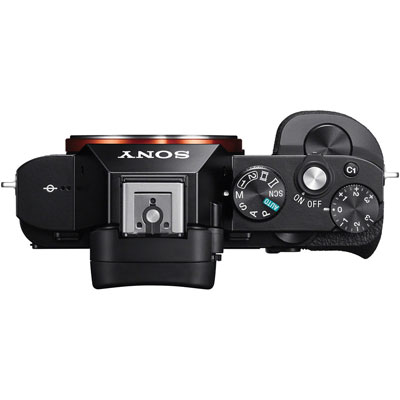
Its with these thoughts I have been looking at the Panasonic LF1.  The big thing is the viewfinder.  The Fuji X10 and X20 are similar but have poor quality optical viewfinders and as you zoom it obscures your view.  While a Leica M has similar issues I am more then willing to put up with the faster lens at a full frame f/1.4 blocking some of the view then I am with the poor view in the Fuji X10.

Its with these thoughts in mind that I have been looking at the Panasonic LF1 and the Leica Leica C.  The big thing about it is its EVF.  While poor quality at least it has one, which is rare in this class of camera.  I have played this camera now on several times and the other week I had another play and also took a few photographs on my own memory card to play with.

The shop was mixed light and I had a slow shutter speed with an ISO of 400. You can see the result above.  ISO400 is quite high for such a small sensor and its handled it quite well.

Today we are very lucky in that there are very few bad cameras.  Now its how a camera makes you feel, how it fits with the way you work that is more important.

Street Photography – Projects and Dogs

I find it very useful to have a few projects to work on, some are long term others more focused.

I bought another photography book recently showing iconic photographs through the years.  One of the shots that caught my eye was by Elliott Erwitt.  He was a great street photographer and one of his long term projects was photographing dogs.

So I thought to myself, on my next trip out I would have a go.

We headed off to Scarborough for a day out and I packed my Leica M8 with 35mm Summicron and 50mm Summilux lens.

Walking the Dog Dogs on the BeachI took about half a dozen shots on the beach plus a couple in town, these I thought were the best two.

Heading out with a definitely goal really focused the mind and I was very pleased with the beach shot which works well when printed big.


Views in the Forest

Visitor

While in North Yorkshire we went for a few walks, including a forest walk hoping to see some deer.

Despite  carrying a big heavy DSLR and long lens together with a Gitzo Series 5 tripod I came back with no shots except for trees!

We were staying in a small wooden cabin in the wood and while there some wildlife did come to visit.

Forest Views

A grey Squirrel did come to visit most mornings as on two occasions did a woodpecker. These were taken through the cabin window.

Forest Views

Fuji go Pro

20140128-131839.jpg
Fuji’s first attempt at a professional Mirrorless camera was the X-Pro1, a good attempt, with nice body and controls, hybrid optical/EVF viewfinder. There was a lot to like, but let down somewhat by the autofocus and what some consider the limitations of the X-Trans sensor.

Today they announce the X-T1, a camera that looks like they have been paying close attention to what Olympus have been doing.

The new X-T1 has a lot of good features including weather sealing and what promises to be the best EVF yet, well spec’ed and a claimed 54 frames per second with no lost frames when the light levels drop (are you listening Sony). Some Mirrorless cameras with EVF’s drop to 10-20 fps making it impossible to capture fast moving action and the decisive moment.

In case your wondering an EVF needs to reach about 240 fps to match a optical viewfinder. I think we are about three years away, but once there I expect most low end SLR’s to drop the expensive mirror and go with the cheaper to manufacture EVF.

Check out Chris’s Blog for more info and thoughts

A few days away – York National Railway Museum

Buffers
Buffers

Last week we had a few days a way in North Yorkshire.  While there we had a day in York and visited the National Railway Museum.  Last year we watched a program about the last remaining A4 Class trains from Canada, the Dominion of Canada and the one from America the Dwight D Eisenhower, and wanted to see these two together with their sister the Mallard and holder of the train land speed record for steam powered locomotives.

A4 Class together
A4 Class together

For two weeks only back in July on the 75th anniversary all six remaining A4 Class trains were together.  This year I believe the Canadian and American A4’s go home so it was a once in a life time experience to these two.

Royal Carriage
Royal Carriage

The museum is a great place to visit with lots of photo opportunities.  Take either a flash gun for fill in flash or a mono, or tripod as the light levels are quite low.

National Railway Museum-2


I was travelling light with just a Leica M8 and a 50mm Summilux and a 35mm Summicron so most of these are shot wide open at shutter speeds as low as 1/15 second.

One advantage of shooting with mirror less cameras is that you can use slower shutter speeds as there is no mirror flapping around to cause camera shake.

Technical Quality versus Artistic Merit

You are photographing an event, you catch a small moment in time.

Technically it’s not quite there but you include in the edits you send to the customer.

They love it, feel it captures the whole evening and it’s their most treasured image.

Another photographer looks at this final image and points out what a bad job you made of the photograph.

It’s highlights are blown – over exposed.
It’s subject is not quite in focus.
It’s suffering from camera shake.
You used too low an ISO, and it was shot wide open so the depth of field is too limited for the subject.

Basically he is saying its a bad image and shows you to be a bad photographer.

Who is right?  Should the customer, have been shown a photo that they artistically love but is technically poor and may make some people think you are an inferior photographer?

Something to think about.

Speeding up Adobe Lightroom Workflow

Lightroom Import Presets

Once you have imported your photographs into a DAM (Digital Asset Management) Package, then to get the most from your photographs, especially if your a professional photographer who may need to lay there hands on a particular image months or even years later there are a number of key tasks to perform.

First is meta data, simple things like location files were shot, copyright information, basic key wording etc.

Then there is developing the files.  The Adobe Camera RAW engine using process2012 is very powerful but the import process does tend to flatten your images resulting in RAW files that will not look anything like as good as out of camera jpegs.

I have a number presets to speed things up.  First common meta data presents with my copyright information and some location presets for locations where I shoot a lot.

Then there are develop settings, some are camera specific, and also apply basic sharpening based on if they are Landscapes or People focused.

Lightroom Import Preset

The key to really speeding things up though is to set these up with your import presets, thus as you can see above, when I import files from my Nikon D200, if the pictures are mainly landscapes I choose the D200-Landscape preset.  This preset apples my basic landscape metadata and copyright information, it sets a backup hard drive destination so the files get backed up to a second disk during the import.  It applies the develop preset I have configured for my Nikon D200’s and does some basic import sharpening optimised for Landscapes. It then ups the contrast and vibrance reduces the saturation slightly and brightens the shadows.

The Leica M8 presets similarly tweak contrast reduces red channel saturation and applies a tone curve.

Using these imports I can get to a position quickly where I just need to add some detail location information, final specific keywords, white balance and a slight tweak to the develop settings.

Lightroom Develop Presets

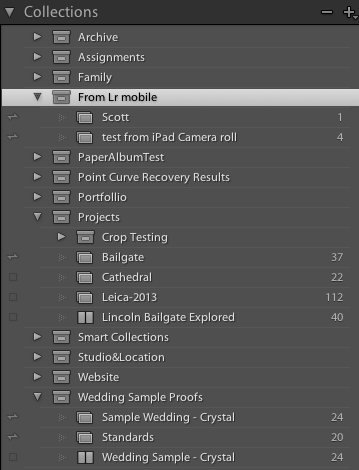
Leica M4 and M8 by Candle Light

Leica M4 & M8 by Candle LightYes it was wet and cold outside.  I did not fancy getting the studio gear out but I still wanted to take some photographs.  What is a photographer to do.  Well that left either taking photographs of my wife indoors, which she suffers enough of already or setting up a quick still life.

Lit by the none existent sun and the candle you see in the picture, the exposure was 5 seconds at f/8, ISO100.