
Leica M8
Leica 35mm f/2 Summicron-M ASPH
35mm, 1/3000 Sec at f/2.4, ISO160
Post Processed in Adobe Lightroom V5.2
On a Mac MacBook Pro, OS-X 10.8.5

Family, Photography and other misc news
You can find a lot in books and on the web about the quality of light. While good photography can be done in bright light and high sun the low sun in Spring and Autumn does give one more opportunities. Now we are in Autumn a walk in a local grave yard revealed a bit low sun catching the top of the angel sculpture. A simple shot made far better with the low directional sunlight.

This shot of a Tufted Duck would look dull without the low sun illuminated it from the front.
Its also a technique that can be taken into the studio with this shot above used as good example, a softbox close up from the side with a little fill from a top hair light.
One should consider light for its direction and its colour, when using flash the source size is also an major consideration.
Now that Autumn is here I’ll be visiting the local parks most weekends, to capture the changing colours and falling leaves.
My first trip last weekend still had most of our local park in clothed in green but there is a hint of colour starting to appear. I look forward to the coming months ahead and revisiting these areas, documenting how the light and colour changes.
If your an iPad user then currently the best option for processing your RAW files is PhotoRaw. With Apples update to iOS7 some developers have taken the opportunity to produce all new versions and have you pay again for the software. Its nice to see PhotoRaw has been fully updated and is a free update again.
Light is an interesting thing. Low sun tends to produce more interesting photographs then high sun.
The above shot is an exception, taken in the Summer, close to noon with high sun.
Spring and Autumn can often produce better light then the summer or winter.
Somebody mentioned to me that Autumn has now started I was quite surprised I was sure we had a few weeks yet of summer still to go.
So a quick web search was in order, when do the seasons change?
It turns out there are three ways of defining the seasons. The UK Met Office define them by strict calendar dates; June, July and August is defined as summer. The way I feel the seasons should be calculated is by using the Solstice and Equinoxes to define the season changes. The last way of calculating the seasons is by using phenology, so when the leaves start to change colour autumn is starting.
For more information check out the following two sites; The UK Met Office & Space.com
The mirror-less Fuji X-E1 released recently was a slightly new direction for Fuji. There are a number of defining features that one thinks of when you mention the Fuji X range. First the X Trans sensor, then the hybrid optical/evf view finders. Finally the transitional controls with real aperture rings.
The X-E1 had no view finder and also a new range of lens with no aperture ring. Now we have a new low end model the X-A1, this is similar to X-E1 but without the X Trans sensor; so basically a Fuji X branded camera with none of the features that define a X series camera.
Its an odd direction for Fuji to take, basically this is the same as most other mirror-less options, it will be interesting how it takes off. I would also like to know if it has the AA filter. The big thing about the X Trans sensor was it did not need the AA filter so if this does not but has a bayer array then their marketing department is sending mixed signals.
If you check the stats on Flicker, you will see that the iPhone is the top camera.
Phones get a lot of criticism on the camera front, but if you compare them to most low end compacts they are pretty good, and as you tend to always have your phone with you its understandable why so many good pictures are taken with phones.
With the release this week of the iPhone and its improved camera and clever dual colour temperature flash you can see from this and from the recent Sony announcements on the phone front that phone camera manufactures seem to be thinking outside of the box and finding solutions to problems that camera manufactures have been unable to solve.
If your after a compact, apart from high end compacts or mirror less cameras its hard to recommend any that could do a better job then most camera phones today.

Its always good to have a few photography projects running, I have one based on female backs, one one drinks and two based on location, one a local park, with each shot taken from exactly the same point through a period of several years and then this one based on Kings Cross in London.
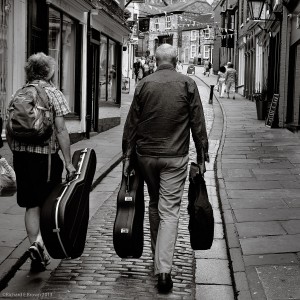
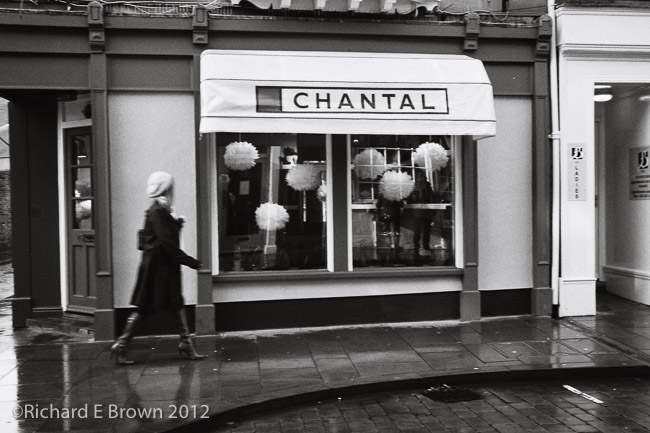
The Kings Cross Project is a set of photographs showing the people and architecture of this great train station. I have been photographing the area with either the Leica M4 using film or my M8, with all shots processed as Black & Whites.
I was in London again yesterday so once again while waiting for my train back home I took the opportunity to work the area some more.

As projects go this one is pretty relaxing and focuses on the building and people in it. When ever I go to London it makes a break to work on this and build on my ideas.
In the continuation of the partnership with Panasonic, we have one of the most interesting small sensored compacts yet.
Since the world went digital viewfinders are the exception rather then the rule.
Fuji with the little X10 produced the first small compact with optical view finder and have upgraded it this year with the X20.
Now we have a new small compact to add to this list of one. The Panasonic model is called the Lumix DMC LF1.
While the Leica model is called the Leica C Type 112. Its a jointly produced model with the electronics being Panasonic and the lens being Leica. The only other difference is the firmware, with Panasonc and Leica using their own firmware giving them each a different colour signature.
The big thing about this camera is the small Electronic Viewfinder a first for a small sensored compact.
Most people would go for the Panasonic model at £200 cheaper it makes sense if you live in the EU. The EU enforces a two year guarantee for electronic goods, so apart from the Leica look from the files due to the Leica firmware the only extra you get is a free license of Adobe Lightroom.
If you live outside the EU then the Leica makes more sense as you get a two year guarantee with Leica products and depending on which non EU country you buy it in you may only get a six or twelve month guarantee with the Panasonic.
So its your choice, is the Leica Badge, the Leica Firmware and Colour signature, a license of Adobe Lightroom V5 and the two year guarantee worth £200 to you?
I find my photography tends to develop in phases. I’ll shoot mainly colour for a few months then shoot mainly Black & White for a few months.
This summer has seen me shoot a lot of Black & White.
The reasons are complex. Most people think of summer shots as being colour, like the shot of the flower basket above.
This last weekend saw me taking a lot of photographs, while I was working on Sunday shooting for a client and providing them with nice colour photographs as they expected, I always give them a few Black & White options.
The Saturday saw me in Lincoln as it was Lincoln Folk Week shooting for myself. There was lots of dancing and events going on. Many of the dancers were wearing colourful outfits, but once I got home I found myself converting many of the photographs to Black & White.
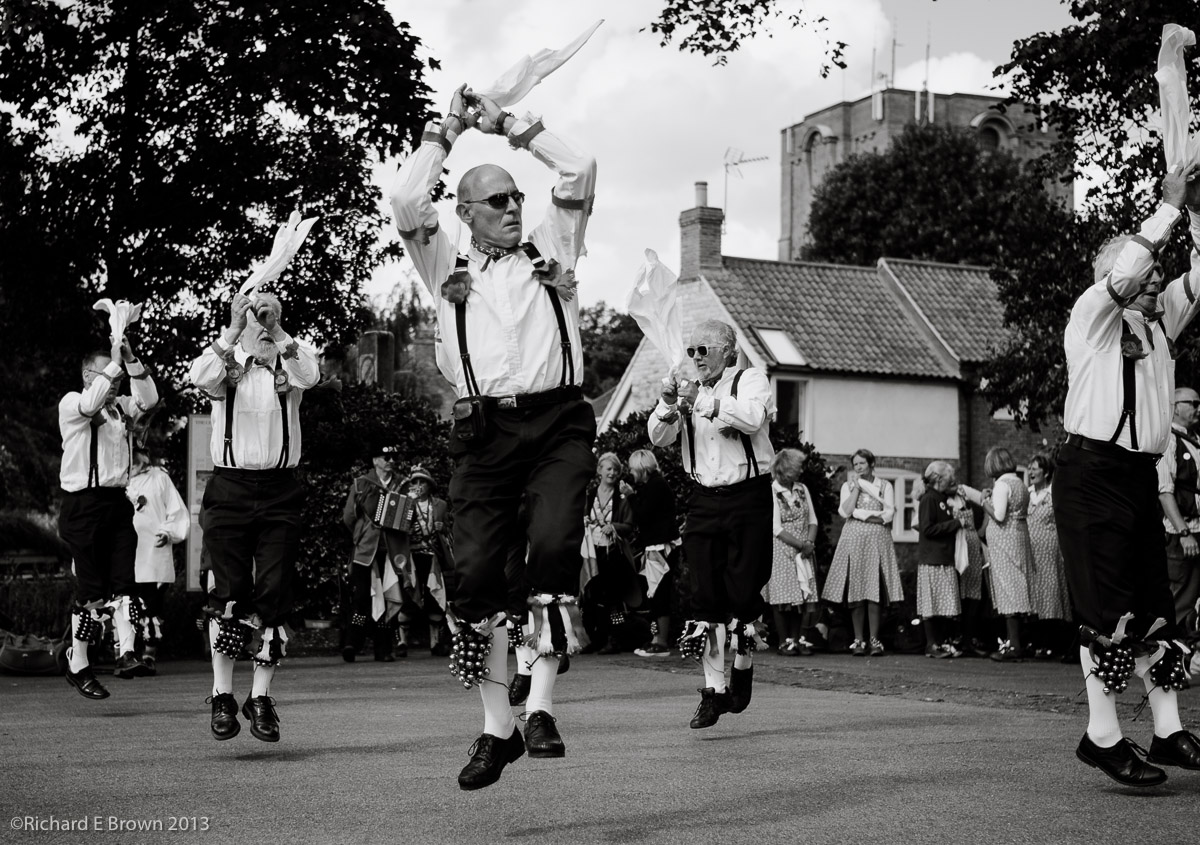
The reasons were mainly two fold. First, some of the shots were taken in bright midday sun, like the shot above, the very bright light and high contrast was at the limit of the dynamic range of the camera. While a lot of post processing did get it back under control, it was easier to produce a Black & White image which suited the lighting conditions better and this also brings me to the second reason, I just think some of these shots look better in Black & White.