Picking a Lens

1025670Sounds easy does it not. Super Telephoto for wildlife, mild telephoto for portrait and Fashion. Wide Angle for Landscapes, nothing to it.

Well actually no, it’s a lot harder then you may think.

Possibly the easiest choice you might think is if you are a bird photographer, then you want a 800mm lens. Just pop down to your local camera store and pick one up.

One you have picked yourself off the camera store floor after fainting at the price you then start to compromise.

It’s now you start to realise there are a lot of choices to make.

You want a lens that can be used handheld in low light, built in VR or IS, maybe f/2 or faster to let in lots of light, produce those dreamy out of focus backgrounds you like.

You want a zoom that can go from 24-300mm on a full frame camera and is small and easy to carry.

Your shooting Architecture and every line should be straight and perfect.

There are lots of lens out there but your going to have to think long and hard about what you want to photographer and how you work.

If you travel long distances on foot to get to your chosen shot, then a zoom or a couple of light primes maybe better for you back and health, then the thought of carrying the big heavy optically ‘Perfect’ lens, heavy tripod etc.

So for me what would I pick.  Well for me weight is not generally a consideration, I would choose a lens over its optical quality then its convenience or weight.

Well first there are Landscape & Architecture wide angles:

  • 20mm f/2.8 Super Wide Angle or the Nikkor 14-24mm f/2.8
  • 24mm f/3.5 PC Lens
  • 35mm f/1.4

Every Day Standard Lens:

  • 24-70mm f/2.8 Nikkor Zoom
  • 50mm f/1.4

Telephotos suitable for portrait, fashion and wildlife photography:

  • 70-200mm f/2.8
  • 85mm f/1.4
  • 105mm f/2.8 Macro
  • 300 f/2.8

So thats my list, what would you pick?

Revisiting your work with Fresh Eyes

It is always worth while revisiting your shots a few weeks after they were taken.

Often a shot you did not like then, you may like now, or you may want to re-process a shot and take it in a very different direction.

Wildlife

Often with my Landscape shots, I might rework them over a year later, or find a shot that I originally did not rate but now love.

With being stuck in bed for most of last week meant I had have not had time yet to add the keyword data to my last shoot.  Now obversely, there are still shots that are definitely misses.  Some how I managed to get every shot of the Grey Squirrel out of focus or badly famed.

Wildlife-2

But some of the other shots that I originally dismissed to high noise and being shot into the sun I now find quite pleasing such as the two Black Headed Gulls in the shot above.

Always a reason for never deleting anything in this digital world.

Camera Choices Part 3 – which SLR

camera choices part 1

Back in Part 1 of this series of articles I mentioned that I would be revisiting SLR’s and here I will.

Many people consider the SLR to be King, it’s what people think of when you mention Priofesional Photography. But except for a few areas the SLR is in fact a Jack of all Trades but master of None.

Actually that’s a little unfair, there are two areas in which the SLR is hard to beat.

  • Wildlife & Macro
  • News Photography & Sport

It’s these two areas that continue to drive SLR design.

I am a Nikon user, so when it comes to SLR’s its the current professional Models I will look at.

Top of the tree is the D4. This is focused on performance, and while it does not have the Mega Pixel count of many other cameras, its speed of focus, reaction, and high ISO performance is unparalleled.

This camera can shoot at 11 frames a second in very low light situations. For photographers who have to get the shot, this camera will do its best to get you that shot.

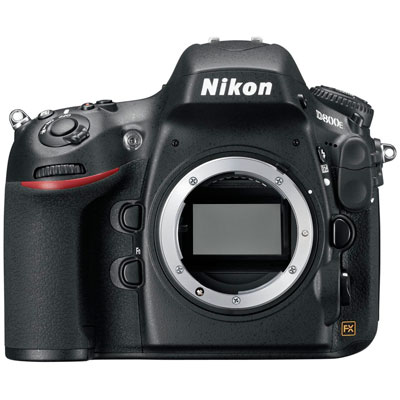
But for some just getting the shot is not enough. What they want is the highest resolution that modern 35mm DSLR can produce. Every subtle of a feather on a bird wants to be resolved to its maximum. So for these Nikon produce two models the D800 and D800E. I have gone on enough about the advantages and disadvantages of the anti-alaising filter, the model D800E lacks this blur -adding filter for the ultimate in resolution but with the risk of Moire.

Lastly in the professional range of Nikon bodies, there is the D300s. This is not a full frame body but is a cropped body, giving a tighter angel of view the a full frame D4. Many treat this as a poor mans sport and wildlife camera. Good reach and fast, but it is getting old now.

  • D4
  • D800(E)
  • D300s

For my work of weddings, studio etc then the D800 seems to be the option, but for my wildlife then a D4 or D300s may be a better option.

So what would be my choice, well just before the D4 was released I would have been tempted by the D3, the D4 while an improvement I don’t like the loss of the second CF card slot, so now I would choose the D800, but it would have to wait. The D800 is 36 Mega Pixels, think new computer and backup drives before reaching for the wallet to buy the camera.

I have missed out a lot of other cameras, what about the D600, slightly lower Mega Pixels then the D800, you could get away with your current computer, but the auto focus system is not up to the standard of the D800 or D4, its been slightly crippled. Unfortunately as you work down a camera manufactures models they become more and more compromised.

I would rather concentrate on getting the shot then fighting the camera, its the top models that allow you to easier to do this.

So yes, when funds allow it will be a D800E unless a secondhand D3s appears at a bargain price.

February is here and a fresh start to the Year

Gull coming to LandAfter the Sunday at Boutham Park shooting wildlife, I have spent the last week in bed with a rather bad chest infection.  Not only did the boss send me home on the Monday but even the Doctor sent me to Hospital to get checked out further.

So most of last weeks Blog entries were all pre-written posts as I have spent the time asleep in bed.

This Monday I am now starting to feel better and i’ll be heading back to work on Tuesday now that I can face staring at a computer screen without my head exploding.

I am going to be thinking hard about what I am going to photography this year.  With this I’ll be considering my lens and where I have gaps in my current selection.

I have two trips planned so far, both landscape and wildlife focussed.  The first is a trip to the Forrest of Dean, the second which we will be planning over the next few weeks is a trip to the Shetland Islands.

For the Landscape I have the gear and equipment I need but will lookout for mild large format telephoto, possibly 200-300mm range.  For the SLR, I am going to keep my eye out for something a little longer then my 70-200mm f/2.8 and possibly add another teleconverter.

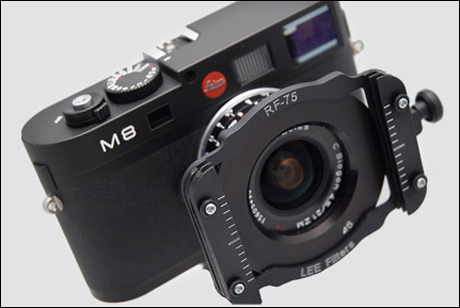
So here as I finishing writing this with one last coughing fit over the keyboard, i’ll also add one more lens into the mix, possibly a Leica 90mm.


Lens to consider this year.

Large format:

210mm or 300mm f/5.6

Digital SLR:

300mm f/2.8 or f/4

200mm /f2

Range Finder:

50mm f/2

90mm f/2

a trip to another local park – Boultham Park

Swans

Sunday we had plans for a walk at the coast, but with the snow on Friday night and then the heavy thaw the rivers were swollen, and some roads flooded.

So instead I decided to make a visit to another local park.  This time it was Boultham Park.  I have fond memories of this park as I used to live close by.  There used to be a lot there but in the 1980’s it became run down, but now its being restored again and is well worth a visit.

Ducks on the Mound

Chris was also up for a bit of bird photography so we met just after dawn at the park.

We entered the park from the church side and as we approached the lake we spotted our first wildlife, a group of Mallard Ducks.

Mallard Duck Feeding

Mallard Ducks Feeding

At first there was little light and most of my first shots were blurred even with the ISO cranked right up.

The Sun did eventually make an appearance, but photography was still difficult.  Because of the ice still covering most of the lake, the majority of birds we on the North side, so to get close we ended up having to shoot into the sun.  It was bright and contrasty causing issues with my exposure.


Ornamental Black Duck Ornamental White Duck

As we slowly made our way along the lake, the light improved and we spotted a number of interesting species of Duck as well as some Moorhen and Cootes.
Ornamental Duck Coote Gull coming to Land Black Headed Gull in Flight

Ducks on Ice
Ducks on Ice

White Duck

As you can see above, quite a productive day with some nice shots.  Yes they could have been a little better exposed and sharper, but Wildlife Photography in the cold and poor light of winter is trick, and for only my second trip out out of the year I am very pleased with the results.

Wildlife Photography on the Cheap

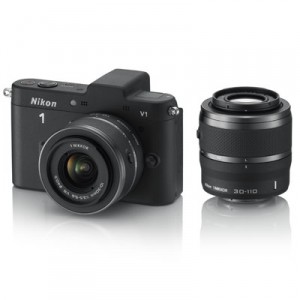
As I wrote the above title, I suddenly thought that I had it wrong.  My budget gear consists of a Nikon V1 system.  Actually this is not a cheap system, something like a Nikon D3100 and a 70-300mm lens would actually work out cheaper and better, but there are some amazing deals at the moment, and the discontinued V1 is now quite a bargain, unlike when it was first released.

The advantage of the Nikon 1 is its size and as I had commuted into Lincoln on my Motorcycle, the full Nikon 1 kit easily fits in my tank bag together with a change of clothes.

So Wildlife Photography on the Cheap, what do you need, well basically I have already said above, a camera has a bit of reach.  The Nikon 1 system is a very fast focusing mirror-less camera and while not as good as an SLR is an option for this type of thing if you can put up with its issues.

The other thing to consider is what you are photographing.  I know of a photographer that instead of a long lens uses bait to bring the wildlife to him.

Today instead of using bait, we had the benefit of ice.  I was photographing in the middle of Lincoln, by the Brayford Pool where I went Kayaking a few months ago.

With the cold weather a lot of the Brayford Pool is now iced over, this has forced the wildlife a lot closer to the bank enabling you to get some good shots with easy.

Camera Choices Part 2

So in my previous post on Camera Choices, I made some generalisations about what camera types I would use for each of my chosen genres.

But lets look at actual models.  If I had the unlimited funds for my GAS (Gear Acquisition Syndrome) what would I actually own.

First of all formats.  Which formats would I own.

  • Large Format
  • Medium Format
  • Small Format

Yes I would own them all.  No one camera can do all tasks well.

Large Format:

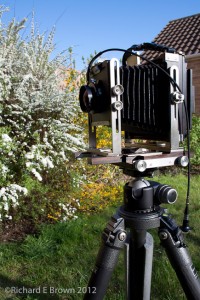
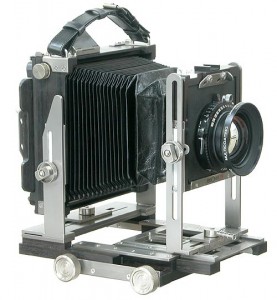
Ebony 45SU


45SU

Theres not a lot of difference between this model and my current 45S, this slightly more flexible and easier and faster to use.  I might add a PhaseOne digital back.  This is my ideal landscape camera.


Medium Format:

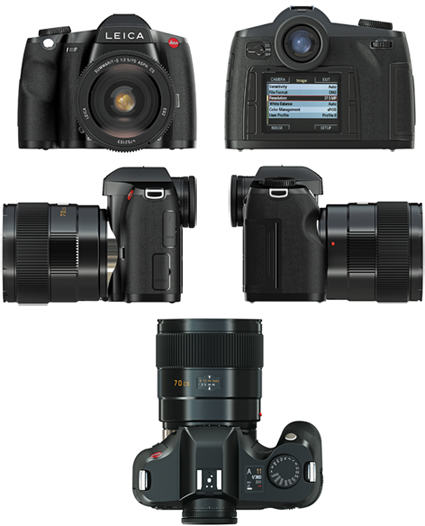
Part of me wants to say my current Hasselblad with a digital back which in many ways is a good solution for landscape work, the back could also be used on the Large Format Camera.  I want a Medium Format Camera for Weddings and Studio work, as fast to use as an SLR, so my choice is the Leica S.


Small Format:

With having the Leica S, then my Small Format camera would actually be several cameras.  First an SLR for Wildlife and Macro work.  Its a tough choice, I prefer Nikon to most other manufactures and it would between the D4 and the D800e, one might even have both, the D4 for wildlife and the D800e for Macro work.  A camera such as the D300s may possibly be a good choice to cover both areas but it getting a little old now and is ready for replacement.  I would be interested in how the D800 handles wildlife, is the frame rate and noise performance good enough.  I don’t know but I feel some testing is going to have to be done.

Next my high quality small mirror-less option, this is going to be a surprise for many but it would be the Leica Monochrom, yes a Black & White only camera.

Finally a Compact and I think it would be Sony RX1, a full frame compact.

Sony RX1

So those would be my choices if money was no option.